20 years of partnership for mutual insurance companies
20 years of partnership for mutual insurance companies


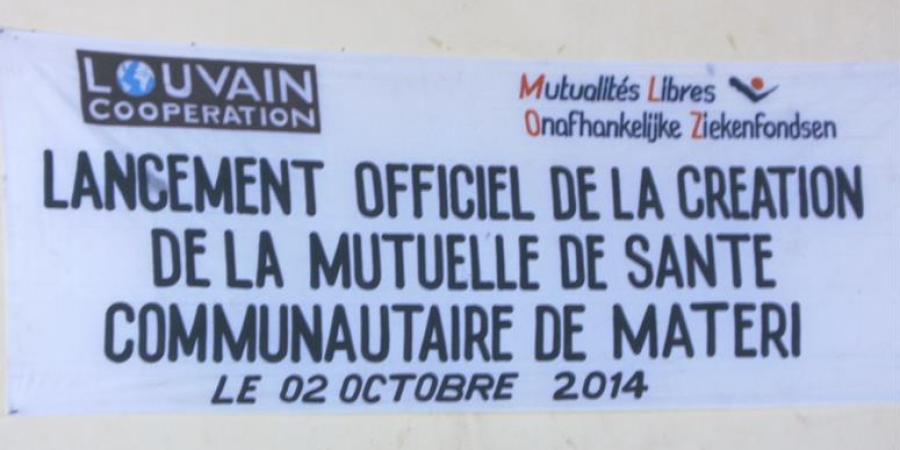
In 2006, the National Union of Free Mutual Societies and Louvain Coopération laid the foundation for a partnership focused on access to healthcare. First in Benin, then in Togo and Burundi, the two organisations collaborated in many ways to develop the mutualist movement in these countries. Twenty years later, Christian Horemans, International Affairs Expert for the Mutualités Libres, looks back on this collaboration.
LC: Why, 20 years ago, did MLs want to invest in the development of mutual health organisations in Africa?
CH : We regularly received requests for support for projects, particularly in Africa. It wasn't part of our plans at the time, but we found it interesting. We needed a high-quality partner, so we started contacting various organisations to learn more about the sector. We were then recommended Louvain Coopération, which was working on mutual societies. It was the first time we had set up a project like this and, for us, the underlying objective was international mutual solidarity and the exchange of expertise and knowledge.
LC : Do your motivations from back then still make sense today?
CH : Yes, achieving structured access to healthcare in countries where 80 to 90 per cent of people live in the informal economy and therefore have no health coverage remains a very big challenge, a truly relevant challenge. There are many stories of families who have been financially destabilised by healthcare costs, and some of them have had a particular impact on me.
LC : What major challenges have you faced?
CH : At first, we focused mainly on access to healthcare. The aim was to help people organise themselves into mutual societies: setting up a general assembly, a secretariat, determining membership fees, deciding what would be covered, etc. One of the biggest challenges was convincing people to remain members of the mutual society even if they hadn't been ill. Culturally, this was very complicated. In 2017, we conducted a study on this subject to better understand and remove certain barriers. We had to convince members to renew their membership but also to reach new members. That is why today we work with members of cooperatives, women's groups, etc. In some regions, illiteracy is widespread. We therefore had to find original ways to talk about mutual insurance: there were plays in the markets, radio programmes to explain mutual insurance and give health advice, and even a football match was organised.
LC : You have also supported several health awareness campaigns...
CH : Yes, prevention is part of the role of mutual insurance companies, and it yields good results. Mutual insurance companies should not only reimburse healthcare costs, but also support their members and their health. We have implemented several initiatives, such as diabetes screening campaigns in Benin and mental health campaigns in Burundi.
LC : Has the partnership between ML and LC changed significantly over the past 20 years?
CH : One of the important developments concerns Synergie MASMUT, a programme that has brought together three Belgian mutual societies and their NGO partners since 2014, which is very useful for working together in different countries. It also allows us to work with the International Association of Mutual Societies, which also has partners in Africa. Together, we have organised international conferences every three years since 2016. These conferences enable us to take stock of the deployment of mutual societies, share best practices, invite and engage in dialogue with international organisations, and more.
LC : Have any events made a particular impression on you?
CH : There have been quite a few complicated issues to deal with. I'm thinking of Covid, which has affected us here, but even more so over there. The closure of borders has led to a drop in membership numbers in a difficult economic climate, as savings had to be made. It's been a difficult time for cooperation. The security situation also had a negative impact, particularly in northern Benin. And then more recently, there was a reduction in cooperation subsidies. The world is becoming tougher and the context more difficult for mutual societies' activities. But there are also positive things, of course, such as the MASMUT Synergy. And together with LC, we have been able to develop some great initiatives. In 2016, we were able to set up a certified training course on mutual management in Lomé. We have expanded our prevention activities and we are seeing the results. The challenge remains to get the states involved and to gain recognition for mutual societies. There have been developments over the last 20 years, not only thanks to us, but we have contributed to them.
LC : In 2027, we will jointly launch a new five-year programme. What will its priorities be?
CH : In the coming years, it is crucial that governments show greater commitment to creating universal health coverage, including mutual health organisations. There has been progress, but we are unable to convince others of the role that mutual health organisations can play in the social protection architecture. Within Synergie MASMUT, we want to carry out a critical analysis to better achieve our ambitions. Twenty years on, the next five years will be crucial in achieving more tangible results and maintaining positive momentum.
More news