Madagascar
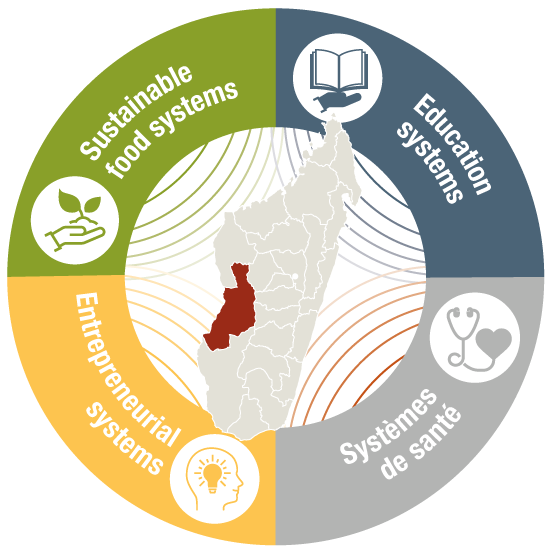
Menabe region
9
partners
2,828
people impacted in 2025
Louvain Coopération in Madagascar
The context of Madagascar
Madagascar, the fifth largest island in the world and an island nation in southern Africa, has abundant natural resources, a young population and an exceptional ecological heritage. However, the country remains one of the poorest in the world, facing major challenges in terms of poverty, food security and climate change.
A difficult socio-economic context:
- 78% of the population lives on less than £2 per day.
- 11 million people are undernourished (2017-2019).
- 78% of the working population works in the agricultural sector, often on unprofitable and fragile land.
The fishing sector, which has great potential, remains under-exploited and threatened by foreign competition.
A fragile healthcare system
- 1.6 million children suffer from stunted growth.
- More than one in ten children die before the age of five.
Environmental vulnerability:
- Madagascar is one of the countries most exposed to climate change in the world.
- The country could lose up to 4% of its GDP by 2050 due to ongoing environmental degradation.
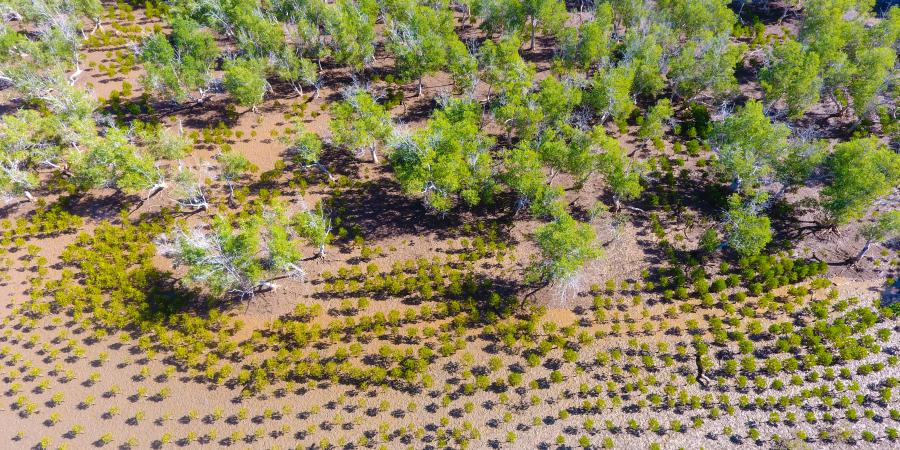
- 25% of mangrove forests have disappeared in 23 years, exacerbating erosion and reducing coastal protection.
Coordination of coastal resilience activities in Morondava
- Project duration: 2025 - 2027
Our Objective
To strengthen the climate resilience of Morondava communities in the face of coastal erosion and flooding through integrated and sustainable coastal zone management.
Our Actions
- Training local stakeholders in integrated coastal zone management (ICZM), climate change adaptation and sustainable natural resource management
- Promoting participatory management of coastal areas with the involvement of local authorities, NGOs and communities
- Strengthening natural defences against erosion (dunes, mangroves)
- Rehabilitation of the Hellot Canal to improve runoff management and prevent flooding
- Raising awareness among communities, particularly young people, of environmental issues and climate resilience
- Development of sustainable and replicable management models for other coastal regions of Madagascar and the Indian Ocean islands
Our Impact
This project contributes to better coastal protection, improves the resilience of populations to climate risks and offers sustainable solutions that can be transferred to other coastal contexts.
Our aim is to ensure the sustainable management of natural resources, particularly mangrove areas, by working to protect biodiversity, safeguard ecosystem services and promote socio-ecological resilience, with the involvement of local authorities and communities. A great deal of thought is being given to this issue within our consortium of university NGOs, Uni4Coop.
To achieve this, together with our local partners, we are working to improve the governance of mangrove areas, through advocacy in favour of these ecosystems, as well as raising local awareness of regulations.
To strengthen shared knowledge in this area, awareness-raising campaigns on ecosystem development and management plans and environmental education in schools are being set up. We also organise consultation and knowledge-sharing sessions on the proper management of ecosystems. Access to this knowledge requires the ability to read and write. Functional literacy and consciousness-raising courses are therefore offered to adults who have not had the chance to go to school.
To encourage the sustainable use of mangroves, we are working to improve the incomes and living conditions of the people living in these areas. This involves supporting sustainable economic activities that do not destroy the ecosystem, setting up and developing group savings schemes, and supporting fishermen's cooperatives. We also organise exchange visits on mangroves and open days in these areas.
Finally, to encourage the conservation and restoration of mangrove areas, we have set up a "green fund" to support local initiatives. We are also distributing a toolkit of best practices and promoting an economic model that reconciles exploitation and conservation.
Partners : FIVOI, FIAME, OPCI Alokaina, FIDEV, ALEFA MENABE, DRPEB (Direction régionale de la Pêche et de l’Economie bleue) et DREDD (Direction régionale de l’Environnement et du Développement Durable).
Partners and Funders
Partners
- IHSM
- MAGNIRIKE
- FIDEV
Funders
- DGD
- Gouvernement monégasque
- Agence Française du Développement
- FFEM
- Commission de l'océan Indien
- Fonds français pour l’environnement mondial
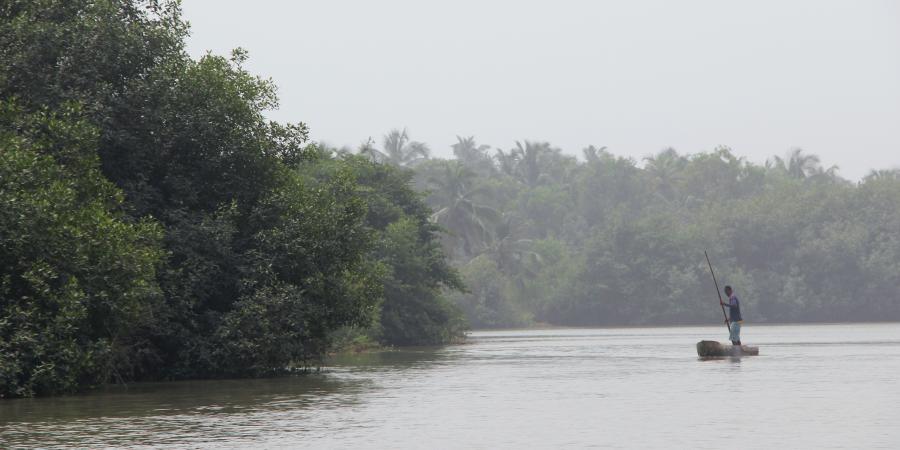
Promoting inclusive fishing in the mangroves of Menabe
- Project duration: 2022–2026
Our Objective
To ensure the sustainability of fishing areas located in the mangroves of the Menabe region by preserving natural resources and meeting the socio-economic needs of local communities.
Our Actions
- Conducting in-depth studies on fishery resources, including field surveys and catch monitoring to understand exploitation dynamics and species diversity;
- Collecting and analysing data to inform local policies and strengthen sustainable management of fishing areas;
- Promoting inclusive fisheries resource management, involving local communities in decision-making and governance;
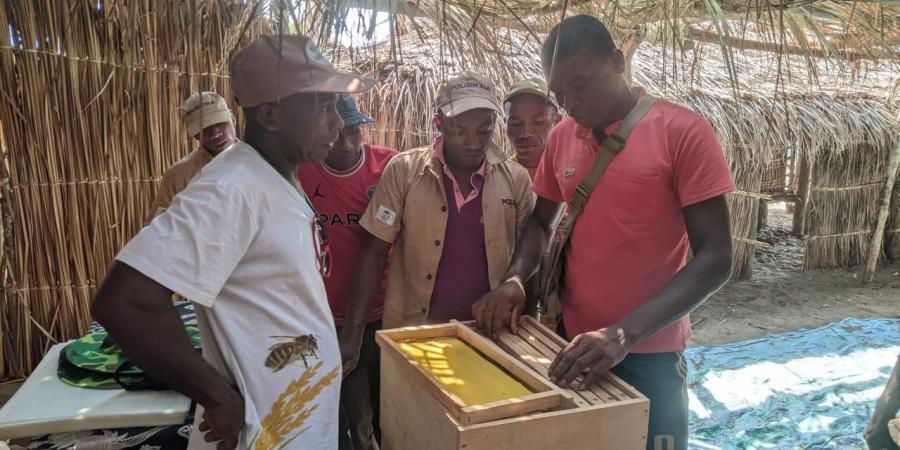
- Identifying and supporting alternative economic activities (beekeeping, market gardening, etc.) to reduce pressure on mangrove ecosystems;
- Strengthening the protection of mangrove ecosystems through strategies adapted to the socio-economic realities of fishermen and the families who depend on them.
Our Impact
This project contributes to a better understanding of fishery resources and enables the development of more sustainable and inclusive fishing practices. It supports the diversification of local communities' livelihoods and promotes the long-term preservation of mangrove ecosystems, which are essential for the region's biodiversity and climate resilience.
Socio-economic resilience of rural women in Menabe
- Project duration: 2022-2026
Our Objective
To strengthen the socio-economic resilience of 200 rural women who are members of Solidarity Savings Groups (GES) by developing their entrepreneurial and agricultural skills and their access to sustainable productive resources.
Our Actions:
- Strengthening governance and decision-making autonomy within 15 Solidarity Savings Groups
- Creation of a seed centre and an agricultural processing unit to improve access to modern agricultural resources
- Organisation of training courses in association governance, financial management and agroecological techniques
- Technical and logistical support for the production of quality seeds and the processing of agricultural products (peanuts, cassava)
- Networking of GES to promote exchanges, solidarity and the dissemination of good practices
Our Impact
This project improves the income and economic autonomy of rural women, strengthens local food security and contributes to the sustainability of agricultural structures through participatory and sustainable local management.
Support for a sustainable food system
- Project duration: 2022–2026
Our Objective
To improve the resilience of rural communities in the Menabe region to the effects of climate change and strengthen their economic autonomy and transition to sustainable and agroecological agriculture.
Our actions
- Technical support for agroecological production and sustainable farm management
- Support for agricultural and food diversification, with easier access to agricultural inputs
- Support for the development of commercial channels and the processing of agricultural products to increase local added value
- Promotion of agroforestry and reforestation to limit erosion and improve soil quality
- Establishment of income-generating activities for rural households
- Structuring and supporting farmers' organisations for better representation with regional and national authorities
- Raising awareness of climate change among rural communities and using the Environmental Integration Tool (OIE) to promote more resilient and sustainable agriculture
Our Impact
This project helps improve food security, economic autonomy and the resilience of farmers to drought and erosion. It promotes sustainable local agriculture and supports the structuring of farmers' organisations so that they can better defend their interests and influence local and regional decisions.
More news +
All videos from Madagascar +
FAQ
Madagascar is internationally recognised as one of the world's major biodiversity hotspots (UNESCO).
More than 80% of animal and plant species are endemic to the island, a global record that is reflected in its tropical forests, mangroves, coral reefs and exceptionally diverse landscapes.
The country's main ecological riches include:
- Primary forests and mangroves that are vital for the preservation of coastal ecosystems;
- Unique flora and fauna: lemurs, chameleons, palm trees and rare orchids;
- Some of the most extensive coral reefs in the Indian Ocean, essential for fishing and coastal protection.
In addition to these natural assets, there are significant mineral deposits: nickel, cobalt, sapphires, graphite, bauxite... All of these are strategic resources for the economy, but their exploitation poses major challenges:
- Environmental issues: massive deforestation, soil erosion, rapid disappearance of mangroves (nearly 25% in less than 25 years according to the FAO),
- Social risks: land pressure on local communities, unequal access to benefits,
- Room for improvement in governance: difficulties in ensuring transparent and sustainable management of these resources.
Conservation policies, supported in particular by international partnerships and local actors, seek to reconcile the protection of natural heritage with economic development for the benefit of local populations.
The combination of conservation with the promotion of local expertise, support for sustainable industries (fishing, agriculture, ecotourism) and the fight against poverty is now considered an essential lever for preserving Madagascar's ecological wealth while meeting the basic needs of communities.
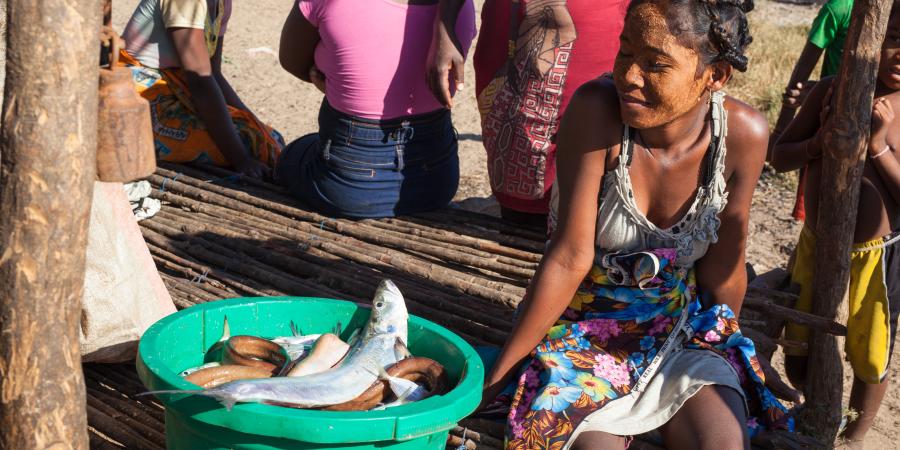
Small-scale fishing is a pillar of the economy and food security for many coastal communities in Madagascar, particularly in regions such as Menabe. However, this sector, which has great potential, faces growing threats:
- Overfishing, due to demographic pressure and sometimes unsustainable practices;
- Increased competition from foreign fleets, which are often better equipped and less regulated, undermining local livelihoods;
- Rapid degradation of mangrove ecosystems, which are essential for fish reproduction, coastal protection and climate resilience.
To address these challenges, Louvain Coopération favours an approach based on community-based and inclusive resource management.
The main dynamics supported include:
- Direct involvement of fishermen and local communities in decision-making, monitoring and environmental governance;
- Support for fishing cooperatives in management and equipment to improve yields, processing and sales of fish and shellfish;
- Development of economic alternatives : support for beekeeping, market gardening or ecotourism, in order to diversify income and reduce pressure on fishing areas ;
- Raising awareness of legislation and good sustainable management practices to ensure the sustainability of marine resources.
These participatory approaches, which combine environmental conservation and local economic development, are now seen as essential levers for the resilience of Madagascar's coastlines and the future of coastal communities.
Despite an abundance of natural resources, Madagascar faces major structural challenges that are hindering its development. Among the most critical issues are:
- Endemic poverty: In 2022, more than 77% of the population lived on less than $1.90 PPP/day (World Bank Poverty Data), making Madagascar one of the poorest countries in the world.
- Chronic food insecurity: Approximately 1.3 million people face high levels of acute food insecurity (World Food Programme).
- Fragile governance: recurrent political instability, limited capacity for state action, low effectiveness of public policies.
- Inadequate infrastructure: unequal or poor access to roads, energy, health and education, particularly in rural and remote areas.
- The effects of climate change: droughts, cyclones, coastal erosion and the rapid disappearance of coastal ecosystems, which increase the vulnerability of populations and pressure on resources.
However, Madagascar has real levers to transform these challenges into opportunities :
- A large and dynamic youth population, representing strong potential for social innovation, entrepreneurship and human capital development.
- An active civil society, engaged in structuring farmers' organisations, protecting the environment and defending fundamental rights.
- Innovative agricultural and agroecological sectors: diversification of production, promotion of local know-how, rise of agroecology and niche sectors.
- Exceptional tourism potential, based on the country's biodiversity and cultural wealth, which is still largely under-exploited.
- Local dynamics of peasant and entrepreneurial structuring, supported by partners such as Louvain Coopération, which invests in training, the empowerment of rural communities and sustainable resource management.
Mobilising these assets – particularly through investment in education, vocational training and social innovation – is now considered essential to enable Madagascar to build a more resilient, inclusive and sustainable development model, capable of reducing poverty while promoting its natural and human heritage.
Madagascar's economy is largely based on the primary sector, particularly family farming, small-scale fishing and livestock farming.
Food crops – rice, cassava, maize – provide most of the local food supply, while certain export sectors occupy a strategic position: for example, the country is the world's leading producer of vanilla, but also exports coffee, cloves and lychees.
The fisheries sector, despite its significant potential for food security and exports, remains underdeveloped. It suffers from competition from foreign fleets and the overexploitation of marine resources, with significant environmental and social impacts.
The extractive industry (mining, oil, precious stones) attracts substantial investment, but its integration into the local economy remains limited:
- Low level of local processing;
- Room for improvement in governance;
- Uneven economic benefits for local communities.
The tertiary sector, particularly services and tourism, has assets linked to Madagascar's natural and cultural wealth. However, its development is hampered by:
- Political instability,
- Inadequate infrastructure,
- Vulnerability to environmental crises.
Diversifying the economy and strengthening local added value are among the priority challenges for the country's development, as illustrated by Louvain Coopération's commitment to agricultural and entrepreneurial sectors.
The healthcare system in Madagascar faces major structural challenges. According to the World Health Organisation, public health indicators remain a cause for concern:
- Chronic underfunding : the share of the national budget allocated to health remains low, limiting the provision of equipment, medicines and staff remuneration.
- Lack of qualified professionals: the shortage of trained health workers affects the quality of care, particularly in rural and remote areas.
- Regional inequalities in access: many villages remain far from health centres and hospitals, with poor road infrastructure and few means of medical transport.
- Alarming child health indicators: According to UNICEF, more than one in ten children die before the age of five; chronic malnutrition affects nearly 40% of children, and infectious diseases such as malaria and tuberculosis continue to account for a significant proportion of preventable deaths.
In the face of these challenges, complementary approaches are essential:
- Development of community health and prevention, to bring services closer to the population and promote better health behaviours.
- Training local agents, who are essential for vaccination, nutrition monitoring and the management of common diseases.
- Pooling healthcare resources, to give families access to basic services at a lower cost and strengthen local solidarity.
Prevention, awareness-raising and combating the stigma surrounding diseases (particularly mental or chronic illnesses) are priorities for sustainably improving the health of populations and strengthening the health resilience of Malagasy communities.
Madagascar's territory is structured around a few large urban centres that concentrate most of the economic, administrative and academic functions, while remaining part of a predominantly rural landscape.
The main cities are:
- Antananarivo: political, economic and academic capital, the true administrative heart of the country.
- Toamasina: Madagascar's main port, a hub for maritime trade and international commerce.
- Mahajanga, Fianarantsoa and Toliara: dynamic regional hubs, each playing a role in trade, local industry or the structuring of the agricultural and fisheries sectors.
However, more than 75% of the Malagasy population lives outside urban centres, often in isolated areas where infrastructure (roads, energy, health, education) remains inadequate or unevenly distributed.
This territorial dispersion exacerbates the challenges of land use planning:
- Limited access to public services,
- Logistical difficulties for economic development,
- Persistent regional inequalities.
Urban concentration and extreme rurality make territorial management a key issue for the inclusive development of Madagascar.
Madagascar currently has a population of over 28 million, making it one of the most populous countries in the Indian Ocean. Its age pyramid is characterised by a predominance of young people: nearly 60% of the population is under the age of 25. This situation is the result of a still high fertility rate (around 4 children per woman) and explains why several hundred thousand young people enter the labour market every year.
Nearly 78% of the population is rural, with the majority of households living off subsistence farming, often facing poverty, land insecurity and climatic hazards.
Life expectancy is around 66 years, but this average masks significant disparities: in rural and remote areas, access to healthcare, education and essential services remains very limited.
This demographic dynamic, marked by strong natural growth, represents both a potential for development and a major challenge. It increases pressure on natural resources, infrastructure and employment, and necessitates ambitious investment policies in education, health and training, such as those supported by Louvain Coopération.
In Madagascar, entrepreneurship is developing mainly in the informal sector, particularly in rural areas where access to formal employment remains limited. Women play a central role in this dynamic: they are heavily involved in agricultural production, food processing and small-scale trade, thus constituting a pillar of the local economy.
However, there are still many obstacles to their full participation in economic development:
- Restricted access to credit and structured financing;
- Limited opportunities for vocational or entrepreneurial training;
- Limited decision-making power within organisations and sectors;
- Increased burden of family and social responsibilities.
In this context, initiatives such as the Solidarity Savings Groups (GES), supported by Louvain Coopération, appear to be powerful levers for women's empowerment. These schemes enable:
- Strengthening skills in management and association governance;
- Access to productive resources and microfinance;
- The creation of income-generating activities and the promotion of local processing.
The structuring of value chains, the pooling of expertise and the networking of economic actors contribute to the resilience of communities and the socio-economic inclusion of women, while offering sustainable prospects in the face of crises (economic, climatic or social). According to UN Women, investing in women's entrepreneurship is now considered a priority for accelerating local development and reducing gender inequalities in Madagascar.
Family farming remains the main economic activity for nearly 78% of the Malagasy population, but it faces multiple risks:
- Climate hazards: recurrent droughts in the south, frequent cyclones, erosion and accelerated soil degradation;
- Limited access to agricultural inputs (quality seeds, fertilisers, modern tools) and credit;
- Inadequate infrastructure: lack of or dilapidated storage and processing facilities, which amplifies post-harvest losses;
- Overall low agricultural yields, hindering the increase in rural incomes and the building of food stocks.
This structural vulnerability translates into persistent food insecurity. According to UNICEF, more than 1.6 million children are stunted due to chronic malnutrition, and the World Food Programme estimates that approximately 1.3 million people face acute food insecurity.
To address these challenges, several levers are now a priority:
- Agricultural diversification and introduction of resilient crops;
- Promotion of agroecology to preserve natural resources and improve productivity in a sustainable manner;
- Strengthening farmers' organisations to promote market access, empowerment and collective bargaining;
- Developing rural infrastructure (storage, local processing) to limit losses and increase added value.
Louvain Coopération is actively engaged alongside rural communities to support the agroecological transition, support the structuring of local supply chains and strengthen food resilience in the face of climate change and recurring crises.
In Madagascar, access to basic education has expanded considerably in recent decades: almost all children now attend primary school.
However, the Malagasy education system continues to face profound structural difficulties:
- Rapid dropout rates after primary school: many pupils leave the system when they move on to secondary school, a phenomenon that is even more pronounced in rural areas, where distance, a lack of secondary schools and family poverty are major obstacles.
- Lack of infrastructure and equipment: many schools operate with dilapidated buildings, insufficient furniture and limited teaching resources.
- Shortage of qualified teachers : teaching staff are unevenly distributed across the country, and the quality of education suffers from a lack of continuing training and institutional support.
The provision of technical and vocational training remains marginal, even though it is crucial for the integration of young people into a saturated labour market and for adapting to the country's new economic and technological needs.
Faced with these challenges, Louvain Coopération is working to support:
- Adult literacy, particularly among women and rural populations;
- The development of associative, entrepreneurial and technical skills;
- The promotion of alternative educational models that are better suited to local realities and the specific needs of communities.
The sustainable transformation of the Malagasy education system requires increased investment in the quality of teaching, equitable access to training and pedagogical innovation, which are essential conditions for strengthening the country's human capital and socio-economic resilience.