Mangroves: the forests that protect the planet
Mangroves: the forests that protect the planet


Mangroves cover 0.03% of the Earth’s land surface, which may seem insignificant. Yet they are among the world’s most important ecosystems. As reservoirs of biodiversity, natural defences against storms and powerful carbon sinks, these coastal forests are essential to local communities and the global climate. Threatened by human activity and climate change, they are now at the heart of conservation efforts.
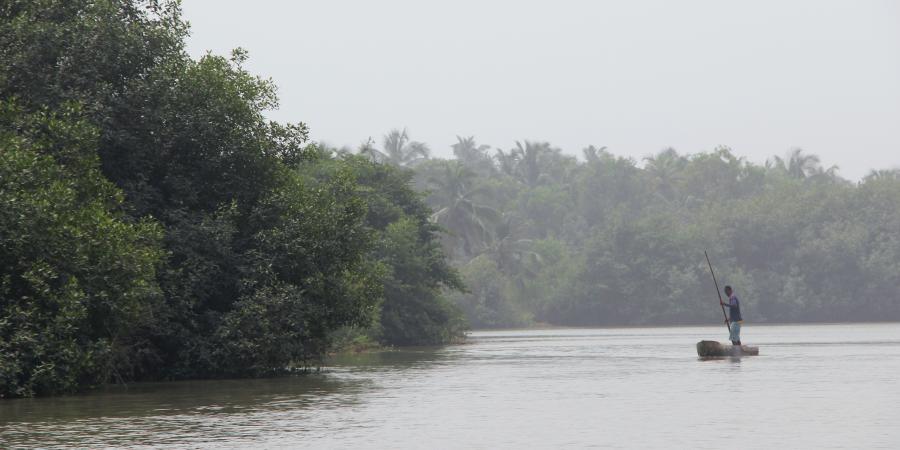
At first glance, they look like ordinary forests. Of course, their roots, which plunge into the inlets, give them a very special beauty. But to discover their true richness, you have to get up close, beach your boat on the sand, right in the heart of the mangroves. There, you’ll find species you won’t see anywhere else: the Caribbean fiddler crab or the jumping fish, capable of climbing trees in West Africa.
Mangroves, these forests of mangrove trees found along tropical coasts, harbour incredible biodiversity. Endemic species adapted to this salty, muddy environment thrive there. Their roots also form a veritable nursery, where billions of marine species (fish, crabs, birds, reptiles…) find food and shelter.
A natural barrier
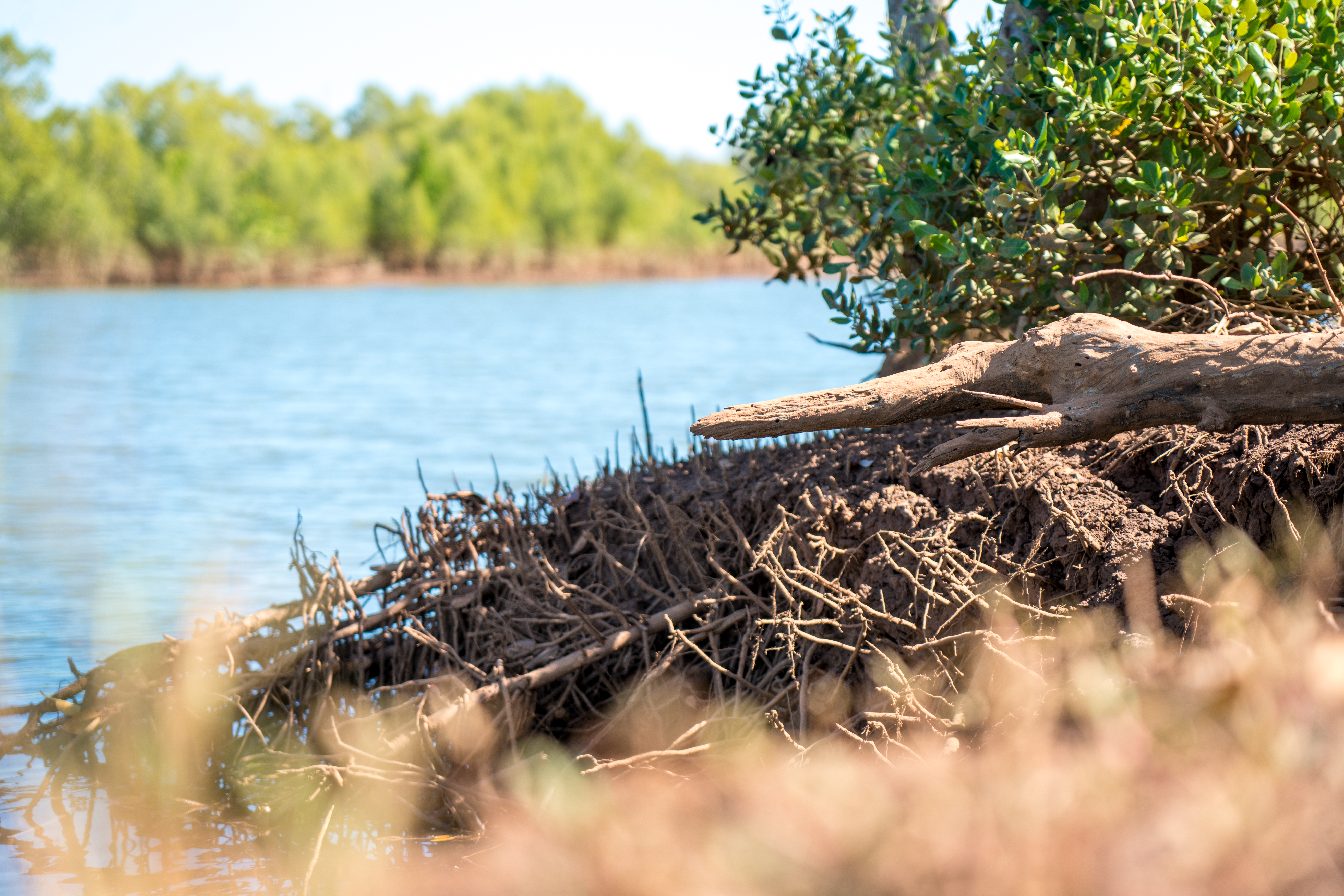 Like barricades lining the coast, mangroves protect the land from strong winds and waves, particularly during extreme weather events. Their roots also act as a filter, making the seawater suitable for coral reefs and other seagrass beds.
These forests also protect the communities and human activities surrounding them. They provide food, firewood and timber, whilst countless fishing families depend on the marine resources they harbour.
Weapons against climate change
Mangroves protect the coastline, but also the planet as a whole. As Constant Setondé Gnansounou, a Doctor of Science and mangrove specialist, explains: “They play a vital role in the fight against climate change by sequestering a considerable amount of carbon. The literature suggests that mangroves sequester three to five times more carbon than terrestrial forests, for example.”
This is because carbon is stored in the mangrove soil, which is damp and low in oxygen. Mangroves absorb it through photosynthesis, and when they die, their remains form a layer of organic matter that sinks into the soil. This is referred to as ‘blue carbon’ because it is contained in the seabed and water. It plays a crucial role in the fight against global warming.
A gradual and worrying decline
Globally, the total area of mangroves is quite small: 147,000 km². And every year, this area shrinks, with a total loss of 40% since the 1960s. As early as 2007, several scientists considered that mangroves were critically endangered or facing extinction in 26 of the 120 countries that have them.
The primary cause of the gradual extinction of mangroves is deforestation, linked to the demand for timber, the creation of cropland, urban development and shrimp farming, an activity that is highly destructive to these forests. Pollution and climate change are also responsible for their disappearance.
Today, 42% of mangroves are located in protected areas, and programmes such as those run by Louvain Coopération are working to save this global treasure.
105 hectares reforested
In Madagascar and Benin, communities are working alongside Louvain Coopération to preserve this natural treasure. Together, they have already reforested 105 hectares of mangroves, whilst changing their practices to limit logging and overfishing. With the return of the mangroves, life is being reborn: fish are returning, honey is abundant and hope is growing.
Louvain Coopération, the UCLouvain NGO, has been committed for over 40 years to a sustainable, fair and inclusive world, founded on solidarity.
The teams at Louvain Coopération work with partners in Africa, Asia, the Andean region of South America and Belgium. Together, they take coordinated action, based on a scientific approach, to strengthen health, agriculture and food security, entrepreneurship and education. Its aim is to bring about a lasting improvement in people’s living conditions and resilience.
Let’s work together to protect the mangroves
More news