Four years of research into mangrove resilience
Four years of research into mangrove resilience


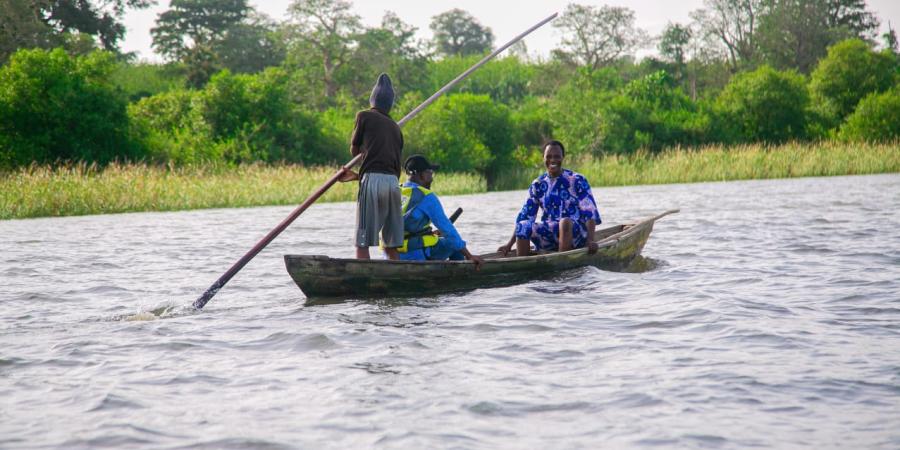
Constant Setondé Gnansounou has just defended his thesis at UNamur. Now a Doctor of Science, he has been conducting research for the past 10 years into mangroves, their resilience and the conditions necessary for their sustainability, despite the impact of human activity on the environment.
‘I have, in particular, studied the use of local knowledge, laws and traditional beliefs in coastal countries, using Benin as a case study’, he explains. "People fear the restrictions surrounding deities. Therefore, when mangroves are considered sacred, their destruction by humans decreases. A combined use of legal texts and traditional beliefs helps to improve the resilience of mangroves through their sustainable use."
In his work, Constant has also developed a specific methodology to analyse the socio-ecological resilience of mangroves, called MaSERA. "Mangroves are highly complex and dynamic socio-ecological systems that we have not yet fully understood. Studying them requires a vast amount of data. In this method, we propose to simplify matters and use more flexible data based on three components: plants, fish and human populations. On this basis, we can already begin to understand the system’s resilience."
MaSERA has already been put into practice in three pilot villages in Benin. It now needs to be tested in other contexts in order to adapt it to a more global level. All this research will also provide advocacy tools to influence mangrove conservation policies.
More news