Pablo Servigne: ‘Forging bonds to weather the storms’
Pablo Servigne: ‘Forging bonds to weather the storms’


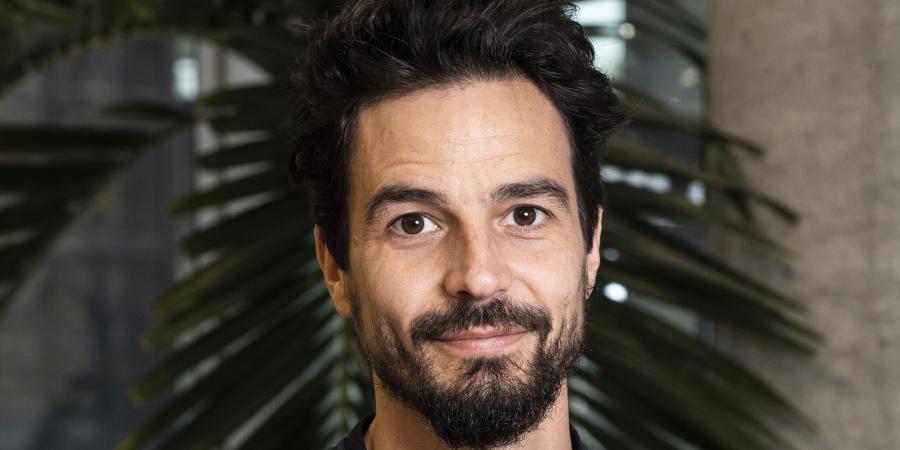
Pablo Servigne is an agricultural engineer and doctor of science, co-founder of the collapsology movement. Known for his work on the vulnerabilities of our societies and paths to resilience, he analyses the mechanisms of mutual aid and the social conditions that enable us to cope with ecological and political crises. Co-author of several influential books, including L'Entraide, l'autre loi de la jungle (Mutual Aid: The Other Law of the Jungle), which explores the dynamics of cooperation at the heart of living organisms, he argues in Le réseau des tempêtes (The Storm Network) that the best way to prepare for crises is to focus on our social ties. Interview.
FN : From your early work on collapsology to your latest book, Le réseau des tempêtes (The Network of Storms), you have moved from diagnosing collapses to reflecting on human networks. What is this “network of storms” all about?
PS : This is a distortion linked to the publication schedule of books, because I have always been passionate about connections, even before collapsology! My main book, L’entraide, l’autre loi de la jungle (Seuil, 2017, with Gauthier Chapelle) was in preparation as early as 2005. Collapsology is a secondary theme for me, but it has had a wider audience. The network of storms is the link between these two themes: how and why to strengthen our connections... in preparation for crises.
FN : Crises give rise to mutual aid, shock, withdrawal and, sometimes, authoritarianism. What makes a society lean towards cooperation rather than fear and isolation?
PS : I believe that human groups or societies behave like organisms. Fear provokes action or inaction, openness or closure, depending on the organism's ability to accept and process fear. This therefore depends on its traumas, its history, its education, and above all its resources: its connections, the story it tells itself, and the joy it can feel. The important thing, then, is not to be afraid of fear, and to cultivate connections, meaning and joy.
FN : How can we distinguish between ‘alternative’ initiatives that merely support adaptation to the existing system and those that truly empower people?
PS : Truly emancipatory alternatives are those that aim to radically transform the system, to the point where it is no longer toxic to the biosphere or to dominated classes and peoples. All measures aimed at maintaining these structural forms of violence are useless or harmful.
FN : During the workshop on 7 April, you will meet students and members of the public who will have read Le réseau des tempêtes. How would you advise them to approach this book?
PS : This book can be seen as an encouragement to forge connections. It promotes the idea that when a crisis looms, we need to strengthen and diversify our relationships. This is the opposite approach to survivalism. I call it SUPERvivalism. It is much more resilient, resistant and robust than turning inwards! The intention is to try it out and turn it into a major movement for regeneration and even... the destruction of weapons. For resilience and resistance. We need both. It is not my vocation to promote or bring this to life, but I want to invite people to feel the power of connections and to participate, on our small scale, in a great movement that transcends us. Like a movement of self-defence for the Earth.
FN : During the conference, participatory mechanisms will enable participants to experience first-hand what it means to “network” in the face of crises. What can they contribute?
PS : The idea behind the evening is to understand the importance of connections and to feel the need to help one another. In two hours with 600 people, it is easy to feel the power of the collective, but less so to experience the creation of connections. The idea behind the evening is to make everyone want to strengthen their ‘storm network’ and turn to their local resources. Sometimes it's not easy to build relationships with your own neighbours, but that's the whole point. As Martin Luther King said in 1962: ‘We must learn to live together as brothers, or we will all perish together as fools.’
Continue the discussion with Pablo Servigne
on 7 April in Louvain-la-Neuve
Small group workshop: A special opportunity to talk directly with the author about Le réseau des tempêtes and his other works.
Interactive conference: Meeting with Pablo Servigne and field workers involved in mutual aid in response to crises. More information here..
Photo credit: Pascal Bastien
More news