Haiti: training and uniting young women to break the cycle of poverty

Haiti: training and uniting young women to break the cycle of poverty


In Haiti, nearly 30% of women have their first child before the age of 20. Some of them find themselves alone and without resources, and 34% report experiencing domestic violence (UNFPA). Together with our partners, we support these women to break their isolation and help them earn a decent income.
Several factors explain the countless early pregnancies in Haiti. A context of political chaos and violence, the lack of sex education in schools, the taboo surrounding sexuality, but above all, a toxic masculinity that has been gaining ground in recent years through the normalisation of norms that legitimise male domination, amplified in a context of crisis and insecurity. All of this increases the risk of non-consensual sex, sexual ‘exchanges’ under economic duress, and unprotected first sexual encounters—all factors that contribute to unplanned pregnancies.
In most cases, these young and very young mothers have no qualifications or sustainable economic activity, which makes them particularly vulnerable. To break the cycle of isolation and poverty, we work with our partner RESEDH alongside women's associations that offer them a safe space for gathering and solidarity. They participate in activities on women's rights, including the fight against violence against women and girls, gender equality, and the prevention of early pregnancy and HIV/AIDS.
Respect and income
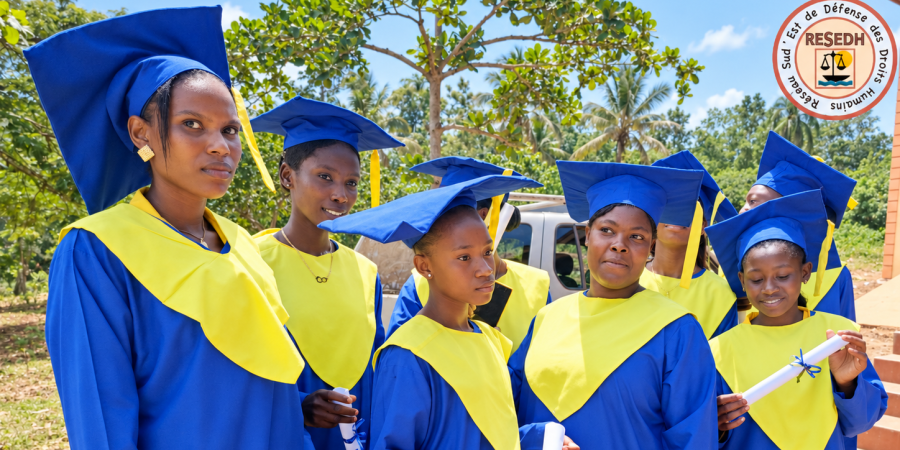
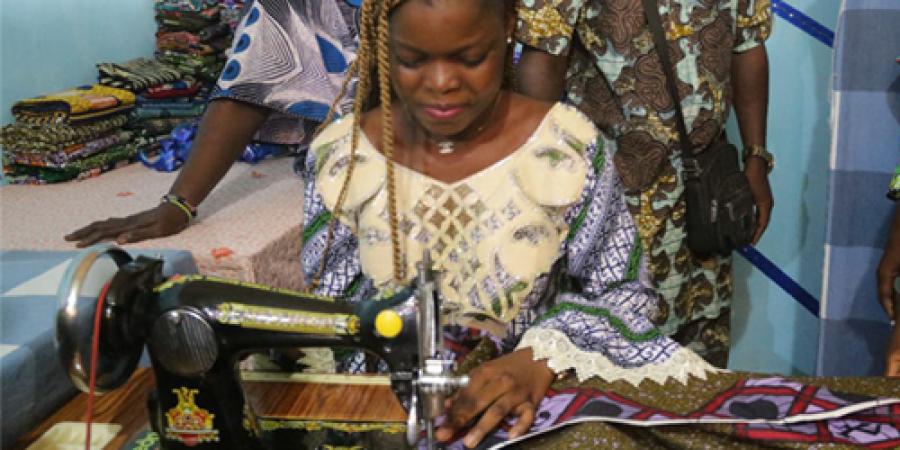
They also have access to various training courses. In 2024, twenty young female members acquired solid skills in project design and management. They are now able to define a project, identify its objectives, draw up a detailed budget and present their project in accordance with the required standards.
Osselita, a 22-year-old single mother, has just completed her vocational training in modern cosmetology, an art course. "Before, people in the community, especially boys, saw me as a parasite. But during the course, when they saw our assignments (manual work), they started to congratulate us. My classmates and I found several people who asked us to do jobs for them. This training programme helps me to take care of my daughter and myself and to gain more respect from men. My dream would be to have my own beauty salon in the community."
More news