Analyze the impact of informal training
Analyze the impact of informal training


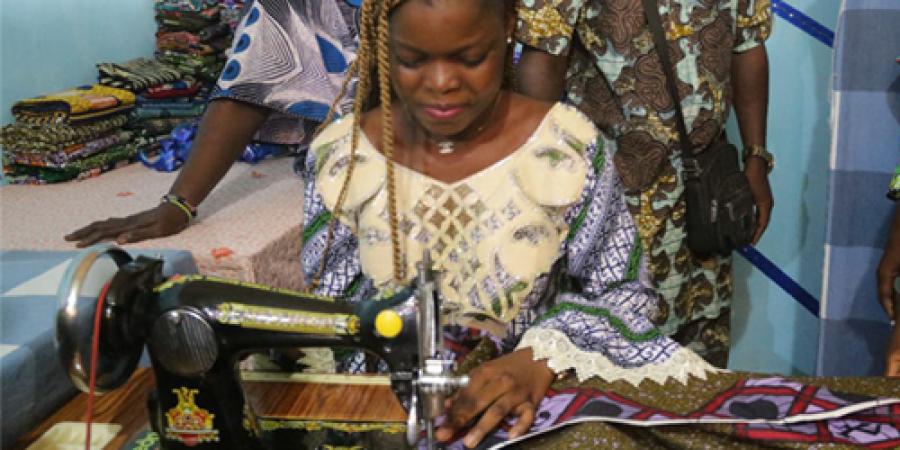
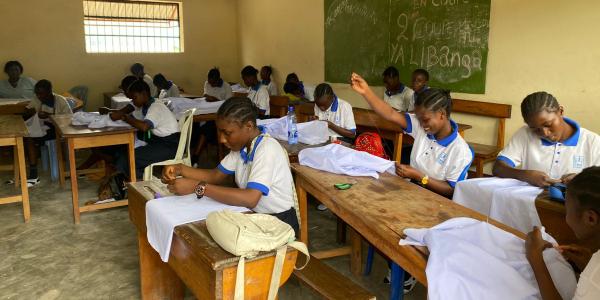
Professor Dieudonné Musa Alokpo, Head of the Department of Education Sciences at the University of Kinshasa (UniKin) is to carry out applied research on the socio-professional integration of street youth through non-formal vocational training, i.e. apprenticeship.
He explains : " The main objective of this research is to evaluate the effectiveness of the socio-professional integration scheme based on non-formal vocational training in the social integration and socio-economic empowerment of street youth in Kinshasa Concretely, it is a question of verifying whether social reintegration through this mode of vocational training is effective, but also determining the success factors on the pedagogical, personal, psychological, economic, environmental... And, if it doesn't work, to determine the parameters underlying the failure so that we can work on them.
We are therefore going to analyse the effect of the initial profile of these young people on their success : their level of education, their gender, the profile of their family, their basic knowledge in the trade they wish to learn... We also need to study the impact of the profiles of the trainers, their personality, their experience, the approach they use.... on skills and learning.
These young people will also be learning some notions of entrepreneurship and digital marketing. We would like to determine the impact of these two training courses on the survival of their businesses. In addition, we want to identify the main factors that motivate or demotivate young people, during their training and their professional installation. And, finally, to determine the teaching methods, the approach that would be the right one and this, depending on the different training courses. "
As an academic NGO, it is important for Louvain Coopération to develop this type of research. In this case, it will enable us to produce a reference document on the conditions for the social integration of street youth through non-formal vocational training. This could serve as a model for other organisations working in this field, for future training.
Furthermore, if the results of this analysis are positive and show great effectiveness, they will constitute an important advocacy tool at State level to formalise/officialise this type of training and guide structures (social or educational, public or private) to offer a complete methodology for integration through learning a trade.
More news