South Kivu: thousands of families have lost their livelihoods
South Kivu: thousands of families have lost their livelihoods


Farming families deprived of their land, women entrepreneurs forced to flee and abandon their businesses… Once again, the people of South Kivu must show courage and resilience in the face of a conflict that continues to drag on. Louvain Coopération, the NGO of the University of Louvain, is raising funds to help families weather this crisis.
This is how some describe South Kivu, a province in the eastern Democratic Republic of the Congo whose soil is rich in metals that are crucial to the global economy. For decades, its population has endured armed conflict, rape and massacres, driven in part by greed and the pursuit of profit.
In January 2025, the fighting intensified when the M23 and its allies took control of several strategic areas. Since then, thousands of families have been struggling to survive amid insecurity and uncertainty.
Farmland made inaccessible
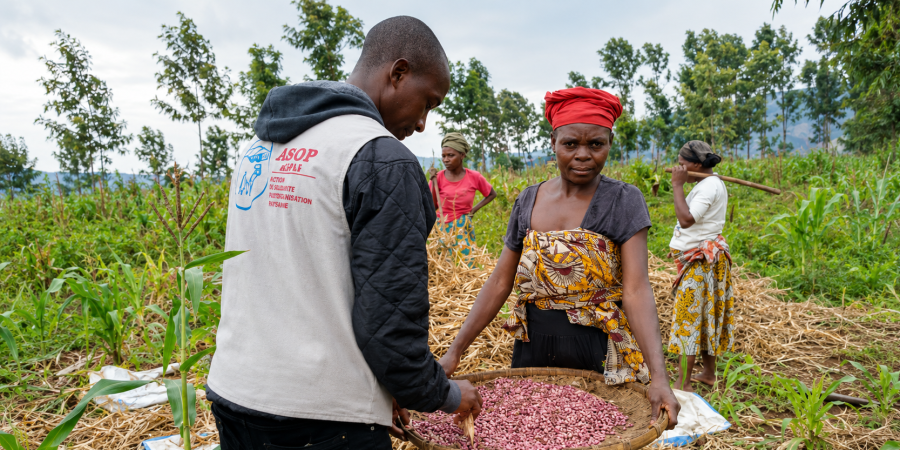
Today, a new challenge is directly threatening the survival of many families: they can no longer access the fields that provided them with food and income.
In several communities, agricultural land has been occupied or lies close to military positions. Some areas are being used to gather stolen livestock, while others have become too dangerous to access because of the presence of armed groups. For many households, cultivating their plots of land is now impossible.
These farming families are left with only small areas around their homes in which to grow enough food to survive. Among the people supported by Louvain Coopération, we have already identified 162 families facing this situation in just two villages in Kabare Territory. Beyond these documented cases, thousands of other households are experiencing similar difficulties across the region.
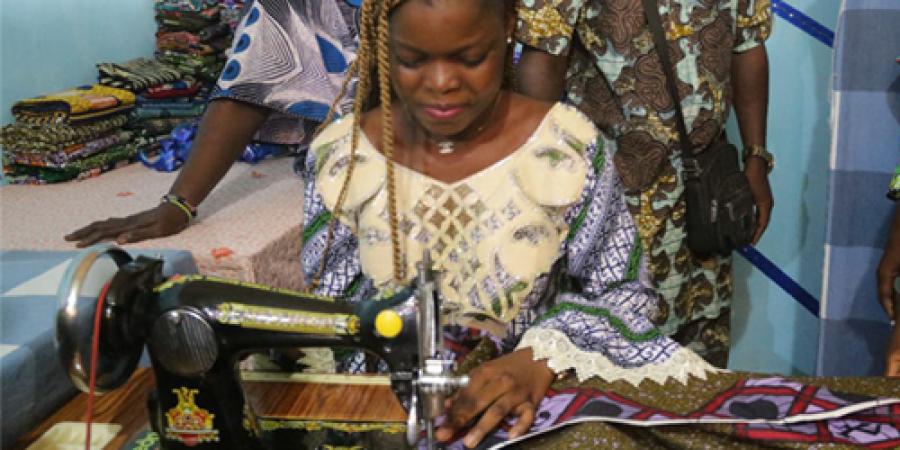
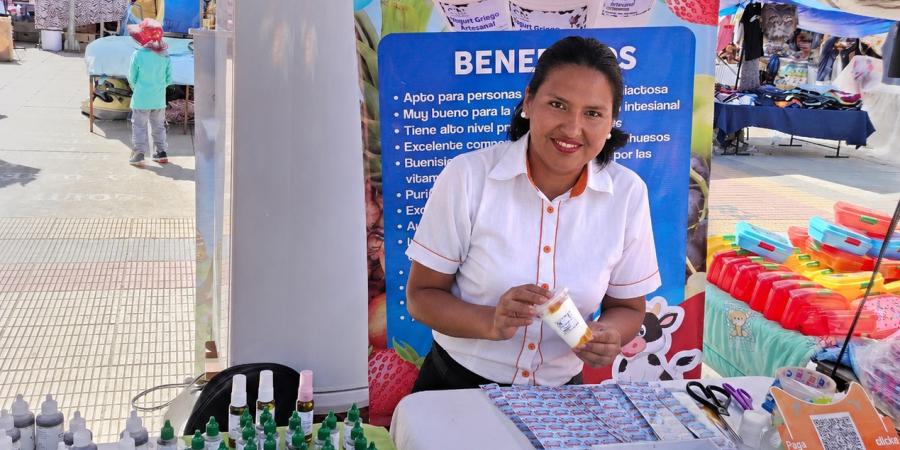
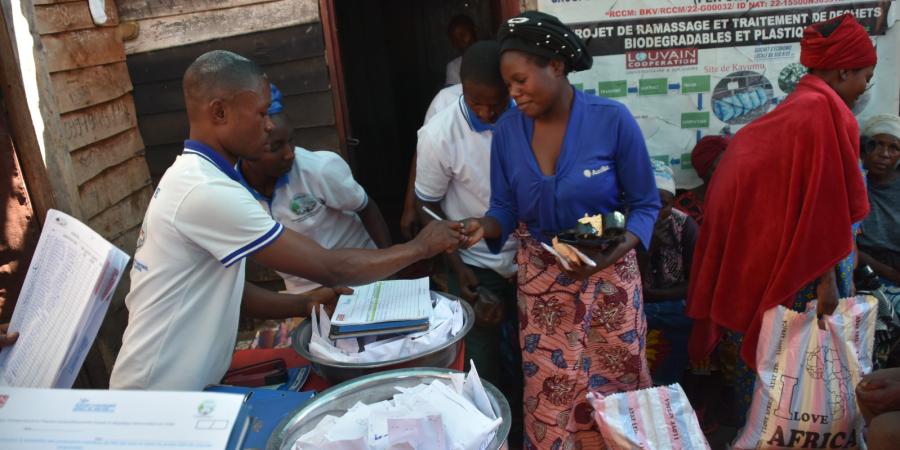
Our local programme manager explains: “Women entrepreneurs whom we have trained are also being affected by the situation. They have been forced to flee, abandoning their businesses and their livelihoods. With no resources left, they are now struggling to provide for their families. Our teams remain in close contact with them. Despite everything they have been through, they have shown a remarkable determination to rebuild their livelihoods as soon as circumstances allow.”
Responding to the emergency and refusing to give up
Together with our field teams and partners, we have developed effective solutions that can be implemented quickly. These farmers and women entrepreneurs are not starting from scratch. They have already received training and support through our projects.
Today, a relatively small amount of additional assistance could help them through this difficult period: short agricultural training courses adapted to the local context; the distribution of farming kits containing tools and fast-maturing seeds; and micro-grants to help women affected by the conflict restart their small businesses.
Our teams and partners are already present on the ground. This assistance can therefore be delivered rapidly to the families most severely affected.
This intervention is urgent because the planting season is coming to an end. Once this window has passed, families will lose a vital opportunity to produce the food they will need to survive in the months ahead.
Louvain Coopération is therefore launching an emergency fundraising campaign to raise the €18,000 needed for this operation. Every contribution will help provide fast-maturing seeds, agricultural tools or support to restart an income-generating activity. These are modest resources, but they are essential to help families grow food, feed themselves and regain a source of income.
A long and complex conflict
South Kivu is rich in valuable minerals, including gold, cassiterite, an ore from which tin is extracted, coltan, which is essential to the electronics industry, and wolframite, which is used in the aerospace industry. These resources, which are crucial to the global economy, fuel competition and sustain a system involving armed groups, smuggling networks and actors across international supply chains.
For many years, precious metals from areas of the DRC controlled by armed groups have been illegally extracted and traded through neighbouring countries. As early as 2024, a UN report stated that the rebels had exported no fewer than 150 tonnes of coltan, a material that plays an important role in the manufacture of electronic devices, to Rwanda. Since the M23 offensive began in January 2025, this trend is believed to have accelerated further.
The region also remains marked by identity-based and intercommunity tensions rooted in its recent history. The 1994 genocide against the Tutsi in Rwanda left deep scars in eastern DRC, which at the time received a massive influx of refugees. Several armed groups trace their origins to the upheaval of that period.
Even today, an estimated one hundred armed groups remain active in the east of the country and are involved, to varying degrees, in the dynamics of the conflict. Caught in the midst of it all, civilians continue to pay a heavy price while demonstrating extraordinary resilience.
Louvain Coopération, the NGO of the University of Louvain, has been committed for more than 40 years to a sustainable, equitable, and inclusive world based on solidarity.
Louvain Coopération’s teams work with partners in Africa, Asia, the Andean region and Belgium. Together, they take coordinated action, based on a scientific approach, to strengthen health, agriculture and food, entrepreneurship, and education.
Its objective is to achieve lasting improvements in people’s living conditions and resilience.
More news