Edito
Our commitment to the sustainable development of mangroves
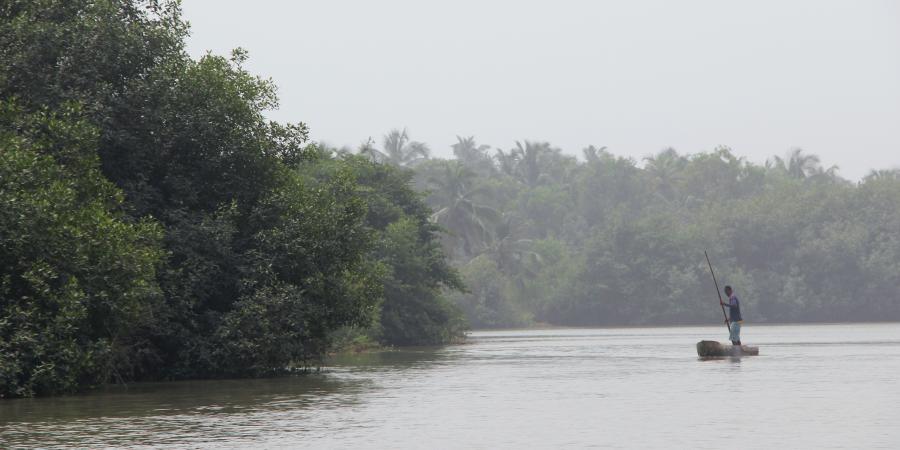
Mangroves are dense forests of intertwined stilt-like trees, situated between land and sea in the intertropical zones. This magnificent and unique ecosystem accounts for less than 0.03% of the world’s land area, which might seem rather insignificant. And yet!
Mangroves provide exceptional ecosystem services (those well-known benefits that ecosystems provide to humans free of charge). It is for these reasons, and because mangroves are under pressure and at risk of disappearing, that Louvain Coopération has been committed to their sustainable development since 2006.
Our mission, in collaboration with our partners and local communities, is primarily to strengthen the participatory management of these ecosystems. We also work to inform and raise awareness among local communities, young people and local decision-makers about the importance of mangroves and how to protect them.
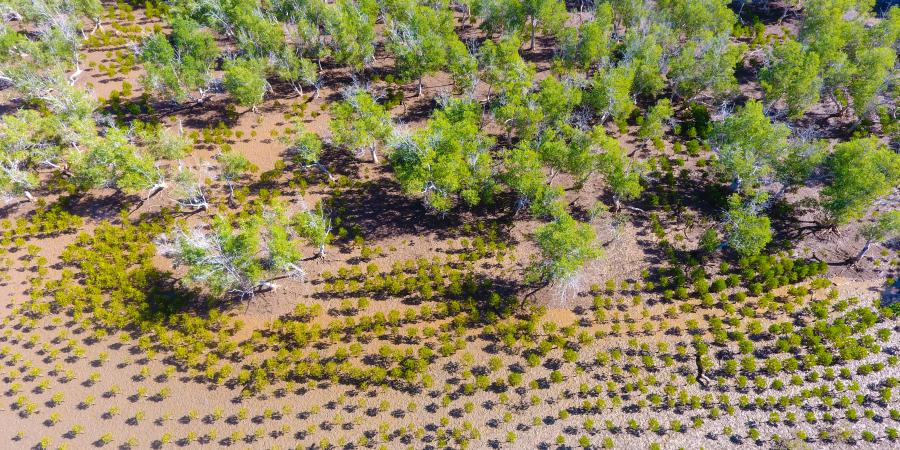
We pay particular attention to their sustainable use by the communities that depend on them, by developing economic activities compatible with this environment, such as beekeeping and ecotourism. Finally, we support local restoration (primarily reforestation) and conservation initiatives.
In the following pages, you will discover all these initiatives, including a PhD thesis on the socio-ecological resilience of mangroves at the University of Namur… where mangroves were present over 300 million years ago. A link to our past and, perhaps, our future, which makes mangroves even more precious in my eyes!
Vincent Henin
Project Coordinator
& Co-leader of the Uni4Coop mangrove programme
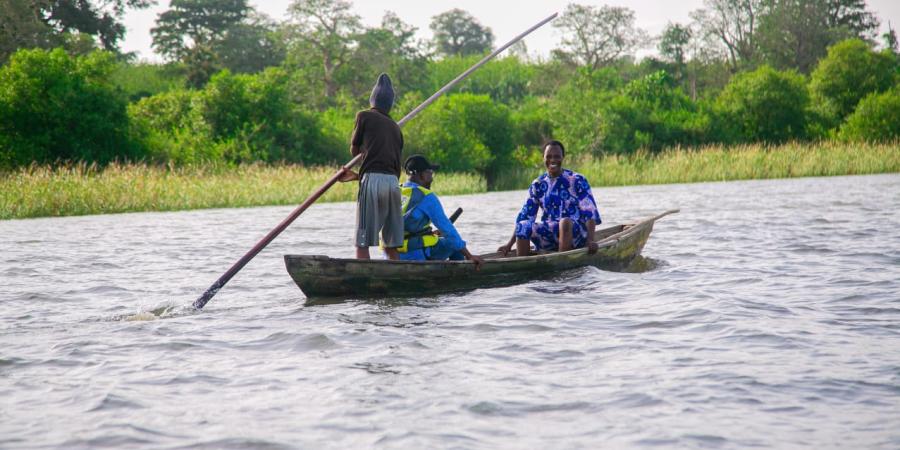
In southern Benin, mangroves have lost a quarter of their area in just a few decades. With the support of Louvain Coopération and its partners, local communities are now working to restore them, develop sustainable alternatives and revitalise fishery resources.
Benin’s two main mangrove areas are located in the Atlantic (communes of Ouidah, Abomey-Calavi and Kpomassé) and Mono (communes of Grand Popo, Comé and Bopa) departments. These areas are particularly vulnerable. It is estimated that deforestation and climate change led to the loss of 25% of Benin’s mangroves between 1980 and 2006, with direct consequences for fishing activities. Since the 2000s, a growing awareness seems to have slowed this destruction. In collaboration with our partners, Action Plus and Eco-Bénin, and local communities, we are part of this movement and are working to restore these forests and establish economic and income-generating activities that preserve their sustainability, such as salt farming.
In Benin, there is a range of laws and regulations in place to protect mangroves. Illegal felling of mangroves can result in heavy fines or even imprisonment. However, challenges linked to a lack of awareness, insufficient resources, inadequate collaboration between institutions and land tenure issues are hampering their enforcement at a local level. In the Mono Biosphere Reserve, we are working with our partners to develop a mobile app that serves as an early warning system, as well as a record of local flora and fauna.
The principle is simple: local residents record and pinpoint instances of damage to the mangroves, and this data is sent to the authorities to increase monitoring of at-risk areas. Furthermore, the information gathered on flora and fauna forms a valuable database for research and documentation of life within this ecosystem.
Four years of research on mangroves
Constant Setondé Gnansounou has just defended his thesis at UNamur. Now a Doctor of Science, he has been conducting research for 10 years on mangroves, their resilience and the conditions leading to their sustainability, despite the impact of human activity on the environment.
In Madagascar, mangroves play a vital role for biodiversity, fisheries and coastal communities. But in the Menabe region, this ecosystem is under threat from human pressure and climate change. Together with its partners, Louvain Coopération is supporting local communities to better understand the overexploitation of marine resources and develop sustainable alternatives.
Madagascar is particularly rich in mangroves: 310,000 hectares of the island are covered by them, 25,000 of which are located in the Menabe region, Louvain Coopération’s area of operation in the south-west of the country. But this wealth is dwindling: since the mid-1990s, 25% of Madagascar’s mangroves have disappeared. In Menabe, 500 hectares are lost every year. Repeated droughts have caused significant migration to the coast, exacerbating an already high population pressure. Mangrove forests there are being cleared to make way for crops (rice fields, sugar cane, etc.) and to harvest wood for heating or construction.
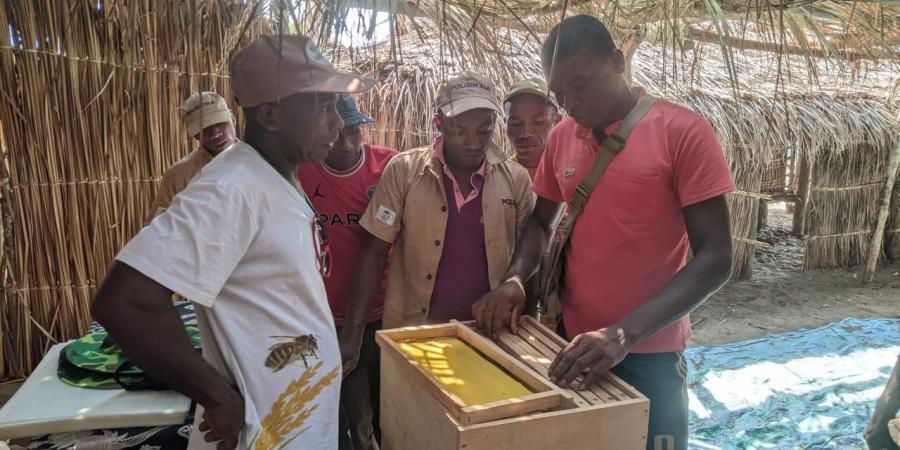
A rare honey with an exceptional flavour. This is yet another gift from the mangroves. When mangrove trees are healthy, their flowers yield a substantial amount of honey. Beekeeping therefore provides a source of income for families, but also serves as an incentive to protect this ecosystem.
Since 2024, we have been working to develop this sector in Menabe. “Linking conservation efforts to tangible economic benefits is an effective strategy for community motivation,” comments Haja Ramanantsialonina, Director of Louvain Coopération in Madagascar. “However, in this region, it is not customary to keep bees. At first, the locals thought it was enough to simply place the colonies in hives and wait for the honey to be produced. Developing the beekeeping sector therefore requires sustained support.”
In collaboration with the Menabe Region’s Technical Livestock Service, we have therefore produced a booklet on improved beekeeping practices.
Thirty-five people attended practical training sessions and received equipment to improve their beekeeping activities. In addition, a honey processing unit has been set up in Belo-sur-Tsiribihina, with the aim of structuring the sector and improving its profitability. Today, 82 people are actively involved in beekeeping in the area as a result of these training sessions. They have already been able to sell the fruits of their harvests.
Although often overlooked, mangroves are among the planet’s most valuable ecosystems. As reservoirs of biodiversity, natural defences against storms and powerful carbon sinks, these coastal forests are essential to local communities and the global climate. Threatened by human activity and climate change, they are now at the heart of conservation efforts.
At first glance, they look like ordinary forests. Of course, their roots plunging into the inlets give them a unique beauty. But to discover their true richness, you must get closer, beach your boat on the sand, right in the heart of the mangroves. There, you’ll find species you won’t see anywhere else: the Caribbean fiddler crab or the jumping fish, capable of climbing trees in West Africa. Mangroves, these forests of mangrove trees found on tropical coasts, harbour incredible biodiversity. Endemic species adapted to this salty, muddy environment thrive there, whilst their roots form a veritable nursery, where billions of marine species (fish, crabs, birds, reptiles…) find food and shelter.
Subscribe to Devlop'RA No. 2