Small-scale fishing in Madagascar: a pillar for coastal communities

Small-scale fishing in Madagascar: a pillar for coastal communities


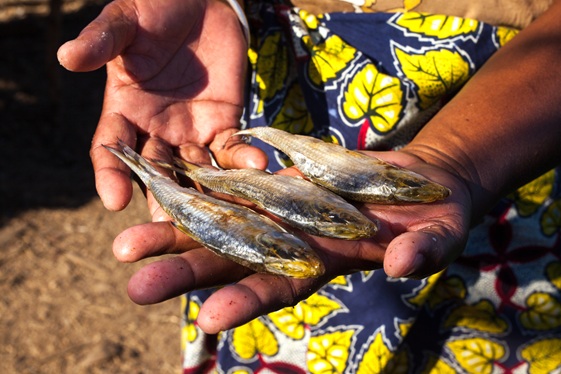
Sea fishing is a socio-economic pillar of Madagascar. 470,000 people work in this sector and 1.5 million Malagasy depend on it for their survival. This activity ensures food security and is a vital source of income for small-scale artisanal fishermen. But today, they are struggling to make a living from their work. Louvain Coopération stands by their side to change things.
A vital activity
Currently, around 1.5 million Malagasy people depend directly on fishing for their livelihood. Among them are artisanal fishermen, estimated to number 170,000. Together, they contribute 6% of GDP and provide employment for nearly 242,000 people in post-fishing activities.
These local communities, based in 2,500 fishing villages, use traditional techniques and rowing or sailing canoes to catch fish, tuna, shrimp and shellfish. Together, these fishermen ensure food security and income for several hundred thousand families.
Dangerous weather conditions
Sea conditions, which are becoming increasingly difficult due to climate change, make fishing with simple wooden canoes and oars really dangerous,’ says Haja Ramanantsialonina, director of Louvain Coopération in Madagascar. These conditions often force fishermen to stay close to the coast and fish in mangrove areas. These areas are becoming depleted and no longer serve as protective nurseries for aquatic fauna, which does not have time to regenerate.
Pressure on fishery resources
‘Industrial fishing, with international trawlers scraping the seabed, is causing a sharp decline in fish stocks. This means we have to travel further and for longer to catch enough fish,’ explains Haja Ramanantsialonina.
 International agreements have been concluded, notably with the European Union, Japan and China. They limit the number of trawlers authorised in Madagascan waters, define their area of activity and provide for compensation for Madagascar. However, some of these agreements lack transparency, with little involvement from civil society, and, above all, are difficult to enforce because the country is unable to monitor its 5,600 kilometres of coastline.
Towards more transparent governance
Since 2021, Madagascar has been part of the international FiTI (Fisheries Transparency Initiative), which aims to make fishing more responsible through transparency and participation. In 2023, the first report was released, making public licences, vessels, catch statistics, funding, etc. The stated objective is to eliminate confidentiality clauses in agreements by December 2025.
Sustainable community initiatives
Aware of the decline in fish stocks and the resulting degradation of mangrove areas, many fishing communities are taking action to protect their natural environment, such as reforestation and the creation of fish breeding areas that are temporarily closed to fishing. Thanks to your support, we are backing these initiatives on the west coast, in the Menabe region.
Essential equipment
In order to protect mangrove areas, which are so important for biodiversity, the fishing cooperatives we support want to avoid coastal areas and access the open sea. To achieve this, they need stronger, motorised canoes. With 25 canoes, we will be able to improve the daily lives of 100 families.
More news