Cognitive biases that influence youth engagement
Cognitive biases that influence youth engagement


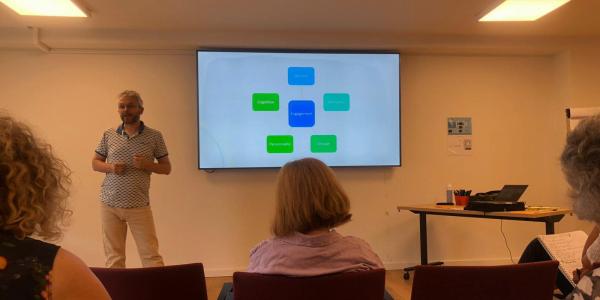
On Thursday 29 June, we had the opportunity to take part in a morning of reflection on young people's commitment to international solidarity, co-organised by Enabel, Quinoa, Louvain Coopération, Oxfam-Magasins du monde and Geomoun. We welcomed Pierre Vandenheede, consultant at EcoRes, who explained the psychological mechanisms that lead to commitment and the cognitive biases that can influence it.
Human beings are not always rational beings. The majority of our behaviour is not in line with our values. In fact, only 15% to 40% of our actions are strictly in line with our thoughts. The false belief that our attitudes and behaviours are correlated is called the Cartesian illusion. This leads to intellectual discomfort, an inconsistency that we try to tinker with to recreate meaning in our actions, via what are known ascognitive biases, distortions in cognitive processing that act unconsciously.
Understanding cognitive biases is useful for bringing about change and commitment in a person. For example, when we want to instigate change in an individual, the "loss aversion" bias, whereby humans will do anything not to lose something, must be taken into account. A second bias is "irrational optimism", which leads people, for example, to underestimate the effects of climate change and to think that the consequences will not have a direct effect on their lives. Another example is 'reactance', where we seek to retain our free will at all costs. We tend to oppose orders and coercive messages in order to preserve our freedom. This is why proposing a change to someone while telling them "you are free not to do it" increases the rate of commitment by 20%.
As an NGO practising Global Citizenship Education, this last example demonstrates the importance of understanding the unconscious processes that influence the behaviour of the people we are trying to raise awareness of, in order to put strategies in place It is therefore crucial to understand these biases and put strategies in place to facilitate change.
More news