Elenge na Mosala: helping every young person find their place
Elenge na Mosala: helping every young person find their place


The “Elenge na Mosala” project – which means “young people at work” in Lingala – has just come to an end in Kinshasa. It enabled 64 young people living on the streets to receive training and earn an income. A look back at this two-year pilot project funded by the Brussels-Capital Region.
In Kinshasa, young people living on the streets face persistent social and economic exclusion, and traditional approaches to support have shown their limitations in helping them achieve lasting independence.
The ‘Elenge na Mosala’ project therefore aimed at the sustainable economic and social reintegration of these young people, by building on local skills and promoting inclusive entrepreneurship. It takes into account major constraints such as mass youth unemployment, the predominance of the informal economy, and heightened social vulnerability, thereby offering a structured and tailored approach.
Five steps towards reintegration
Together with our local partners, Ndako Ya Biso and Bana Ya Poveda, we have developed an approach based on five stages of working with young people:
- Guidance and psychosocial support: to tailor the programme as closely as possible to the young person and their situation;
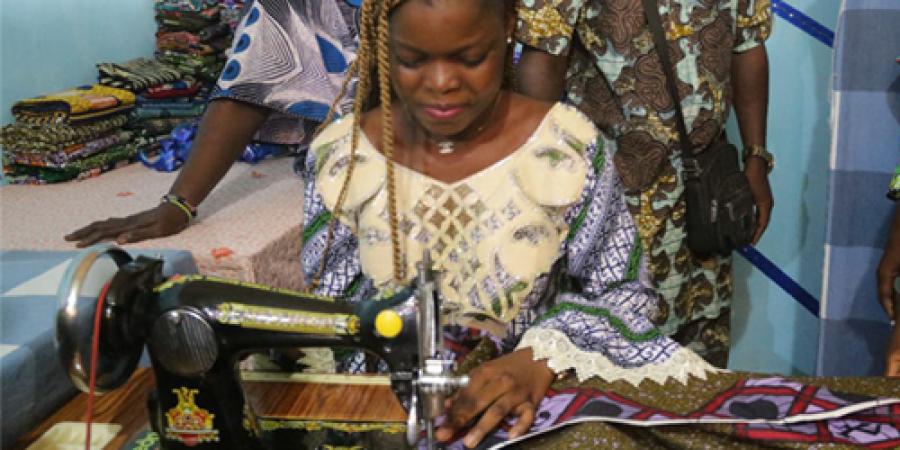
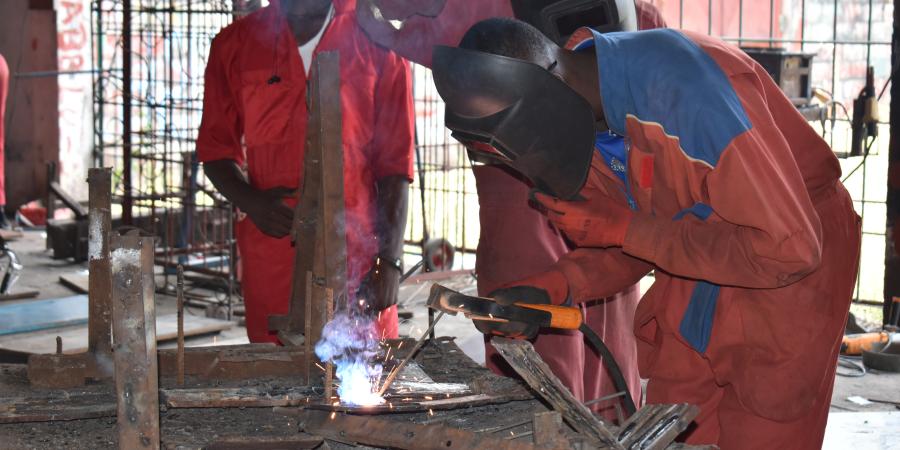
- Technical training: learning a trade from selected artisans, mainly in workshops, in real-life working situations;
- Entrepreneurship training: to prepare young people to set up and manage their own business, whilst developing their financial independence;
- Digital marketing training: to introduce young people to the use of digital tools to promote their products or services;
- Socio-economic integration: based on assessment by a panel, the distribution of work toolkits, and the incubation and support phase for the young person during the start-up of their business.
By the end of this project, 50 young people had completed vocational training in various trades and 37 of them were supported through to economic integration. They are now generating an income and can support themselves. These are very encouraging results in this extremely challenging context. “We are witnessing a social and identity transformation among young people”, says Elie Nsana, an entrepreneurship expert with Louvain Coopération in Kinshasa. He adds: “Ultimately, Elenge na Mosala demonstrates that investing in the capabilities of vulnerable young people yields tangible results that offer hope. It calls for these efforts to be continued and scaled up to build a more inclusive society, where every young person can find their place and actively contribute to economic and social development.”
More news