Access to healthcare to alleviate poverty
Edito
2016 will be a pivotal year for Louvain Coopération
2016 will be a pivotal year in many respects. We are celebrating 10 years of a solid partnership with the National Union of Free Mutual Societies, focusing on mutual health insurance in Benin and Togo. Every year, the collaboration grows stronger. The exchange of expertise is increasing. All this is taking place in a context where social protection and universal health coverage are high on the African political agenda. Beyond municipalities and districts, the issue is national. The MASMUT programme, which brings together the various Belgian mutual unions and their NGO partners, supports this advocacy. Different models are in competition with each other. The mutual health insurance scheme is the only one that distributes responsibilities between the state, healthcare providers and patients in a functional and democratic manner.
But 2016 is also a year of reflection and decision-making with a view to our next strategic plan and our 2017-2021 programme. A detailed assessment of our past actions has prompted us to further broaden our understanding of the social and cultural mechanisms at work everywhere. What codes govern the choices of micro-entrepreneurs, their reluctance to join a cooperative or mutual society, their diet, their concept of well-being? Our teams and partners, with the transdisciplinary support of UCL, will devote their energy to these analyses, which will inform our projects and actions. Finally, 2016 also brings new projects and new areas of intervention. More to follow in the next issue!
Félix Vanderstricht
In Benin, a new project is being launched in four municipalities already covered by Louvain Coopération's mutual health insurance schemes. It aims to support farmers in the Atacora region and work with them to combat hunger. At the heart of this integrated project is a cereal: fonio...
‘Fonio is a cereal, a very small seed, which is tending to disappear in West Africa, but which is still widely consumed,’ explains Adama Toni, project manager. ‘In northern Benin, one of the communities we work with has soil that is different from the others. It is a bit mountainous, the soil is poor and farmers are unable to grow the cereals that are usually produced in Benin. Market gardening is also complicated. On the other hand, it is easy to grow fonio there!’ This cereal also has the advantage of being deeply rooted in tradition, where it plays an important role in the diet. Harvested early in the year, fonio allows people to shorten the lean period between two harvests, which in some years can mean empty granaries and famine.<:p>
‘Improving food security also means helping the population get through this very difficult period,’ Adama adds.
The programme will therefore focus on promoting fonio. The aim is to encourage farmers to produce it, but also to facilitate the various processes involved in producing and processing this cereal. Currently, these processes are particularly arduous. The project managers will therefore work with farmers to find solutions to improve their working conditions.
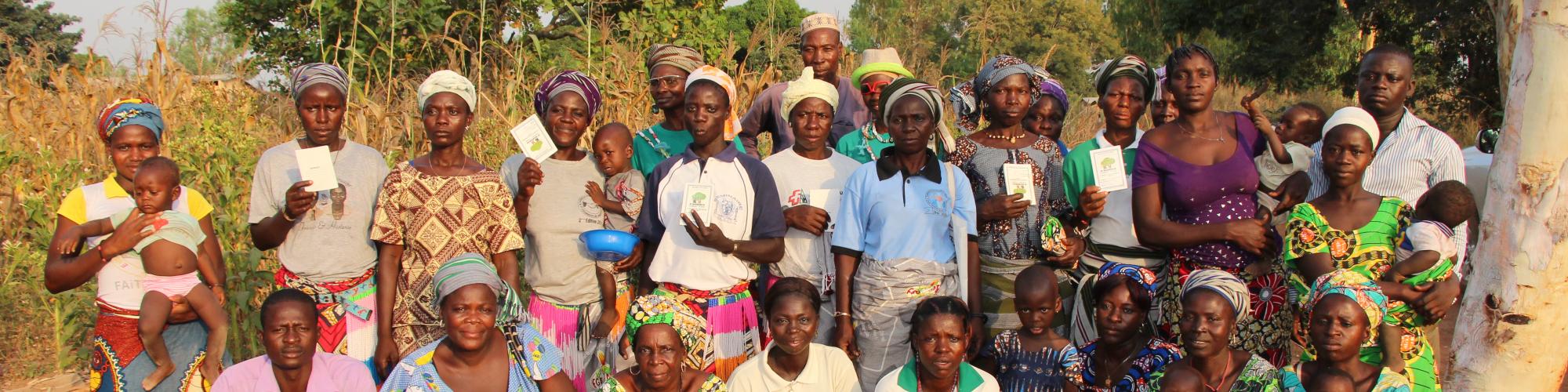
Another aspect of this project focuses specifically on supporting women. Louvain Coopération will help them to develop various income-generating activities related to fonio, its sale and processing.
An important aspect of setting up mutual health insurance schemes in the South is taking into account the financial means of future members. For this system to be effective, each member of the target communities must have sufficient financial means to pay the membership fee. In order to achieve this objective, Louvain Coopération gives mutual members a significant say in decisions relating to the mutual health insurance scheme. The General Assembly, made up solely of members, sets the annual membership fee. The range of healthcare services covered by the scheme depends on this fee.
Another important rule in this system is that it must cover entire families. It is not possible for only certain members of the family to join. This principle prevents only one sick person from becoming a mutual insurance member. It also offers all members of a family the opportunity to benefit from the mutual insurance system in the event of a problem. For large families, the contribution is adjusted and slightly reduced.
Louvain Coopération supports the development of mutual health organisations in West Africa. In this way, it provides disadvantaged populations with access to healthcare, while combating hunger and poverty.
The link between mutual health organisations and food security may seem unclear to most of us. However, in Benin and Togo, it is a daily reality for thousands of people. In these West African countries, 80% of the population works in the informal economy. These people are particularly vulnerable and are not covered by any health insurance scheme.
‘Most of them are farmers with very irregular incomes,’ explains Brice Titipo, head of mutual health organisations in West Africa for Louvain Coopération.
‘During certain periods of the year, money is scarce and, unfortunately, most local diseases develop at the same time. For example, the sowing season runs from July to October. Farmers have to invest heavily and are short of money. But this is also when malaria develops and is at its most serious.’
Complicated births, accidents, infections... are other cases that require the intervention of health professionals. But without money to pay for care, many families of sick people wait, postponing treatment until it is sometimes too late. Conversely, some take on heavy debts to pay for treatment. This can then lead to the whole family going without, even suffering from hunger, in order to repay their creditors. ‘It was important to find a mechanism to enable these populations to cover their healthcare needs,’ concludes Brice Titipo.
In Atacora, a particularly poor region in northern Benin, Louvain Coopération has developed an integrated project combining food security and access to healthcare. For families with low and irregular incomes, even a minor health problem can turn into a disaster. To treat one of their own, families have to make significant sacrifices, even selling their entire year's harvest and going without food themselves. Louvain Coopération is therefore fighting on two fronts: access to healthcare through mutual health insurance schemes and food security through support for agriculture and micro-enterprises.
Thanks to this project, women in particular can develop their small businesses by producing and selling foodstuffs. Part of this income is reinvested in contributions to a mutual health insurance scheme. These families are then better equipped to combat poverty and disease.