
Paths to
independence
Edito
Supporting young people,
means investing in the future
The social and professional integration of young people is not simply a matter of teaching them a trade or helping them find a job. It also involves creating the conditions that will enable them to take their place in society, become more independent and build a sustainable life plan. This issue is all the more important given that, globally, around one in five young people are neither in employment, education nor training, and that access to stable work remains particularly difficult for the most vulnerable young people.
At Louvain Coopération, we have chosen to provide comprehensive support. It all begins with listening: understanding the young person’s background, their aspirations and skills, but also their vulnerabilities, and then weighing these up against the realities of the local labour market. This is followed by career guidance, psychosocial support, vocational training, the development of soft skills, entrepreneurship and digital skills. Where self-employment is the most realistic option, access to facilities, coaching and post-training support becomes essential.
Our experiences in Kinshasa and Bukavu show that sustainable integration is built over time and involves a whole ecosystem: young people, families, psychologists, educators, master craftspeople, businesses, local authorities and partners. Our ‘Springboard to Decent Work’ and ‘Elenge na Mosala’ projects illustrate this approach: they have enabled young people in highly vulnerable situations to develop skills, gain access to income-generating activities and regain confidence in their ability to shape their own futures.
Our added value lies precisely in this integrated and personalised approach: not merely imparting skills, but helping each young person to turn their skills into real opportunities. Supporting social and professional integration means enabling young people, who are often faced with exclusion, to become fully-fledged economic, social and civic actors.
Elie NSANA MUTAPAYI,
Entrepreneurship expert
for Louvain Coopération in Kinshasa
How can a child be helped to rebuild their life and grow when they have experienced the worst? This is a question that the teams supporting children and young people living on the streets in Kinshasa grapple with every day. For over 10 years, Louvain Coopération has been developing a psychosocial approach based on providing holistic care for young people. This support is essential to enable them to rebuild their lives and look to the future. Louvain Coopération is supported in this endeavour by the non-profit organisation Terres Rouges.
“The psychosocial aspect of the work carried out within care institutions is essential. These young people have experienced trauma, violence, and both economic and sexual exploitation. Therefore, unless work is done to help them recover psychologically, they cannot envisage a future for themselves. ” For the past seventeen years, Hermann Hessou and Eric Messens, directors of the Benin and Belgian branches respectively of the non-profit organisation Terres Rouges, have held this conviction. It has enabled them to develop specialist expertise in this field, which they strive to share.”
Today, many care centres, in Kinshasa and elsewhere, wish to set up psychosocial support programmes, but they are not always well equipped to carry them out effectively. “The psychosocial approach is an in-depth process, built up step by step as a relationship of trust develops. It requires those working with the child to be professionally equipped. One aspect, for example, is being able to cope with the child’s changing accounts of events – ‘lies’ intended to protect them – or even their challenging behaviour. All of this requires a very specific moral and professional disposition,” explain the specialists.
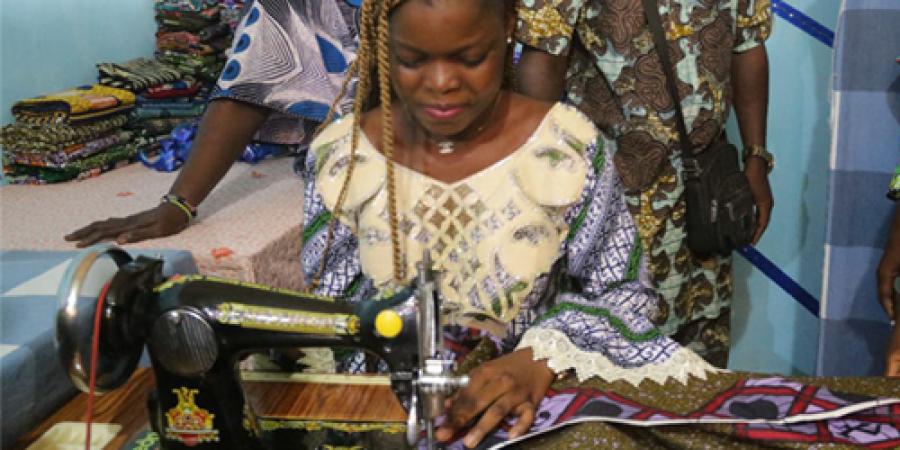
Benin also has a very large number of young people in need, particularly in the Mono department in the south of the country, which is characterised by high rates of youth unemployment and underemployment. “Many leave the education system early due to a lack of financial means and lack both the technical skills and the resources needed to set up their own business. This situation drives many young people to migrate to the major cities, to neighbouring countries (particularly Nigeria) or even to the West in search of opportunities that are often precarious”, explains Arielle Dossou, director of CJA (Carrefour Jeunesse Afrique), a partner of Louvain Coopération. “Yet these young people have enormous potential. When they receive appropriate training, personalised guidance and support in setting up their businesses, they succeed in developing income-generating activities and become key players in local development. ”
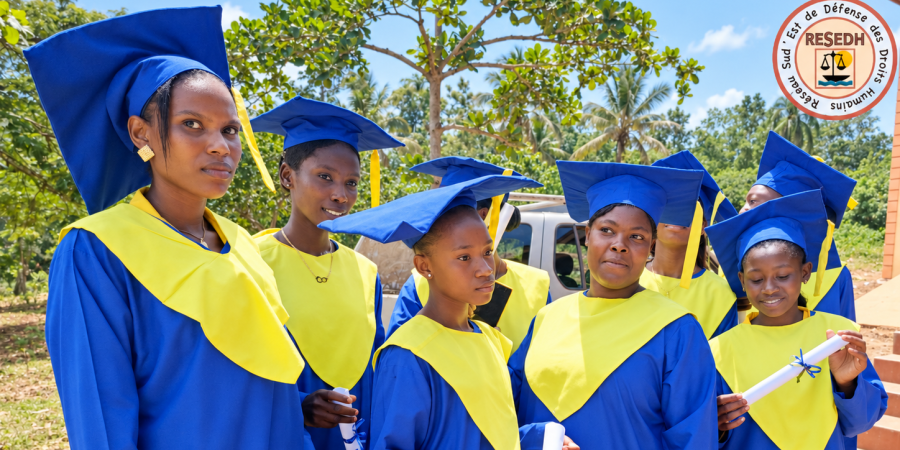
In Haiti, it is estimated that 200,000 children are living in extremely precarious conditions. Some have fled violence or abuse; others are simply looking for something to eat or a way to earn a little money. In Jacmel, in the south-east of the country, our partner, RESEDH, supports them to help them envisage a different future.
A few years ago, the issue of street children was mainly confined to the Haitian capital, Port-au-Prince. But today, the economic and political crisis has exacerbated this problem and caused it to spread throughout the country. In Jacmel, in the south-east, RESEDH (the South-East Network for the Defence of Human Rights) has been supporting these young people for ten years.
There are many different paths that lead these children to the streets. “Some are placed in domestic service: their parents entrust them, for example, to traders so that they can work. Very often, these children are subjected to abuse and violence. They then flee this situation and end up on the streets”, explains Jetho Pierre-Paul, coordinator of RESEDH.
Other young people come from Port-au-Prince in the hope of finding a less challenging environment, far from the gang violence that plagues the capital. Finally, some still have families, but live in such precarious circumstances that they have to scavenge for money or food on the streets rather than go to school.
In South Kivu, helping young people enter the labour market remains a major challenge. Given the lack of job opportunities in the city, agriculture offers a way to earn a living, provided one has the technical and entrepreneurial skills needed to generate a decent income from it.
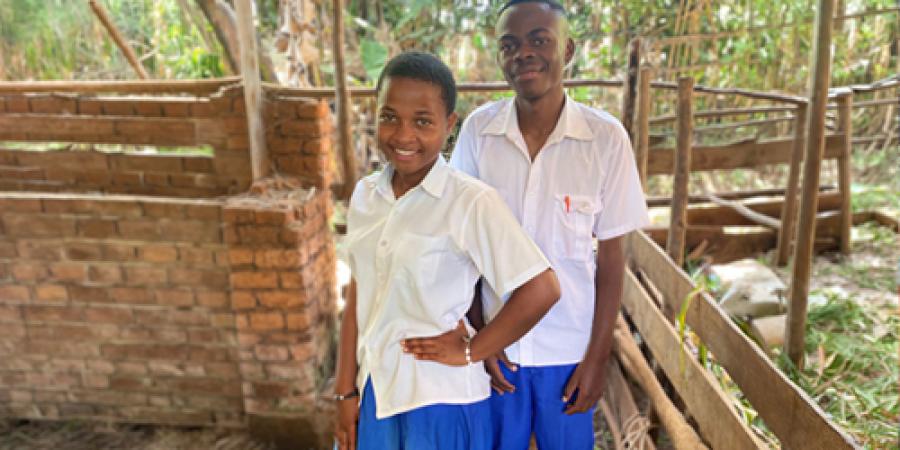
Since 2022, Louvain Coopération and its partners have been working with agricultural technical colleges in the Walungu region to improve the training programmes on offer there. This support is aimed at four colleges and the 486 pupils enrolled on agricultural and veterinary courses. “In particular, we are helping to improve their demonstration facilities. These have gradually become genuine learning spaces where young people acquire skills that can be directly applied to their entry into the workforce. For example, we have refurbished a rabbit hutch at the school in Muku, purchased a boar for the pigsty at the school in Cihérano, and trained pupils to set up a macro-propagator for healthy banana suckers …” , explains Olivier Matumaini, Sustainable Food Systems Manager for Louvain Coopération in South Kivu. “We also offer training to teachers and school managers so that we can work with them to develop a continuing professional development plan”.
Upon completion of their training, graduates who set up a business in the fields of the circular economy or agroecology are monitored and supported by our local partner as young micro-entrepreneurs. The aim is to support the development of their initiatives, but also to analyse which agricultural and veterinary training programmes offer the greatest potential.
In Tarija, in southern Bolivia, young people are gradually regaining hope for the future. Thanks to a project run by Esperanza Bolivia and Louvain Coopération, schools, businesses, local authorities and entrepreneurs are joining forces to create jobs, support entrepreneurship and better meet the needs of the local economy.
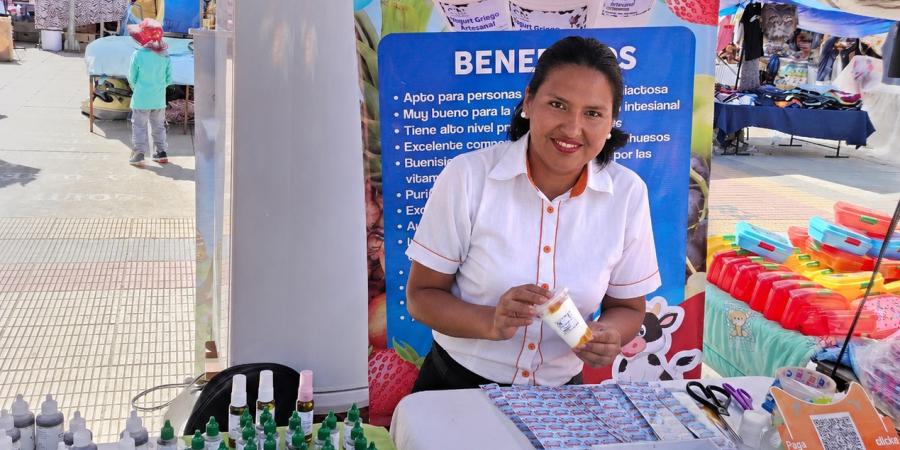
More than 700 students trained in various sectors (food, tourism, agriculture, etc.), 200 entrepreneurs – mainly young people and women – receiving support, around 20 young people now making a living from their own businesses, 12 better-equipped technical colleges… In Tarija, in southern Bolivia, young people’s career prospects are gradually improving. Behind these results is the NGO Esperanza Bolivia, which works hand in hand with Louvain Coopération, thanks to funding from the European Union. Since late 2023, links have been forged between training programmes, entrepreneurship and the needs of local economic sectors, with the aim of offering young people genuine prospects for the future in their region.
Reforestation of degraded hillsides, protection of rivers, construction of school latrines and bringing about lasting behavioural change: this is the challenge taken up by the PASCALE-B project through its support for local organisations in Burundi.
After four years of hard work on environmental issues in Burundi, it is time to take stock of the PASCALE-B project, funded by the European Union. Since 2022, the project has enabled Louvain Coopération and its partners to support 80 Burundian civil society organisations (CSOs) active in the field of environmental protection, to train their members in various areas, and to successfully implement 16 very concrete initiatives proposed and led by local organisations in support of the environment. “Supporting CSOs in implementing their grants has not always been an easy task: some organisations have shown reluctance regarding financial transparency, making the support process more challenging,” comments Jean Claude Nkeshimana, project manager at Louvain Coopération. “But thanks to close, training-based monitoring, the majority of CSOs were able to be effectively coached and successfully carry out their activities”
Devlop' No. 23
Pathways to independence
Find out more