Edito
Ever more integrated and inclusive projects
Five years ago, Louvain Coopération joined forces with ULB-Coopération, Eclosio and Fucid to create Uni4Coop and develop a joint development programme from an academic perspective. The great success of this first experiment encouraged us to further develop this collective work for the next five-year programme of Belgian Development Cooperation (DGD 2022-2026) with several fully integrated projects, based on the observation that pooling our efforts and sharing our respective expertise significantly strengthens our impact.
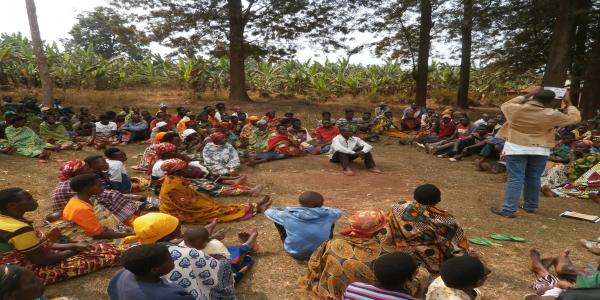
In the field, Louvain Coopération has worked successfully with local communities who are fully involved in the projects. Peer educators, community workers, self-help groups, patient clubs and farmers' cooperatives all contribute to improving their resilience and their health, social and economic situation. This participatory, multi-stakeholder approach, which strongly involves civil society and the relevant local authorities, enables Louvain Coopération and its partners to contribute to inclusive, equitable and sustainable development by supporting the most vulnerable people. Sharing our respective expertise significantly strengthens our impact.
Of course, the Covid-19 pandemic has caused many difficulties in implementing activities and identifying future projects. This will remain a challenge in the coming years. However, the crisis has encouraged the creation and use of digital tools that have made it possible to maintain and sometimes develop exchanges with and between the field.
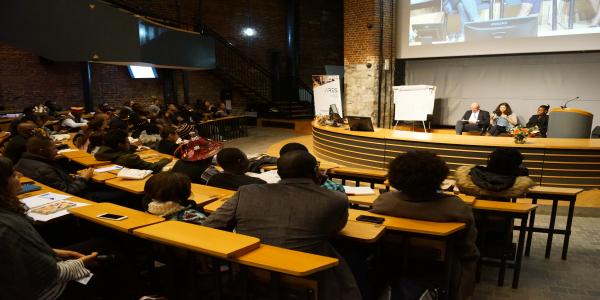
Through Uni4Coop, Louvain Coopération aims to further strengthen university engagement in both the North and South through collective work with communities, authorities, civil society and the academic world. All this is done with a view to mutual learning and the inclusive co-construction of knowledge.
This is what Louvain Coopération has been striving for over the past several years, and it is the objective we will continue to pursue in the future.
So far, our NGO has continued to work with the Cambodian Ministry and our local partners, as well as communities on strengthening health systems to manage non-communicable diseases. Three interdependent levels of action.
Among the work carried out, and thanks in particular to funding from the WHO, a new database system has been developed. This system takes into account the specific functionalities corresponding to the management of patients suffering from diabetes and hypertension. In addition, in partnership with the International Organisation for Migration (IOM), PLAN International and the University of Hong Kong, a national survey on the health and social consequences of migration on the children and families of migrant workers was conducted for over a year. This survey, published in 2020, proposes solutions and recommendations to be applied at national level. These include improving access to child health services and social health protection systems.
At the same time, the two provinces of Kampong Cham and Tbong Khmum now have two hospitals and nine health centres, including three new ones since 2020. The system put in place now makes it possible to offer consultations to patients, train doctors in diagnosis and thus enable patients to be treated in the most appropriate way. To achieve this, social workers continue to play an essential role in supporting patients. They make home visits, and provide psychological support to patients and their families.
A particular focus has been placed on children, adolescents and women who are victims of domestic violence.
In Burundi, the development of mental health initiatives is undoubtedly one of the greatest success stories of the last five years. Starting from scratch, in a region where mental illness is often equated with witchcraft, the IZERE project launched in 2017, in partnership with BADEC Caritas Ngozi, has contributed to the definition of a national mental health policy.
In a country going through periods of repeated economic crises, accompanied by mass violence, the field of mental health stood as a real unknown for the Burundians. ‘Mental illnesses were not understood by the population and were often confused with acts of bewitchment. We therefore had to train agents to raise community awareness and change mentalities and behaviour,’ explains Félix Mbanyankindagiye, technical assistant in Burundi for Louvain Coopération.
A total of 74 community health workers have been trained and equipped to raise awareness in the community but also to guide, guide and accompany patients. At the same time, patients who are stabilised, convalescing or even cured are now active in 24 associations with 855 members. These organisations provide technical and financial support to help them set up small businesses. ‘Thanks to these associations, we are also seeing an increase in resilience and self-esteem among former patients, as well as the strength to face the future with more hope,’ comments Félix.
For its work, our local partner BADECCaritas Ngozi has received the World Health Organisation's (WHO) ‘Prize for the Prevention and Control of Non-Communicable Diseases 2020’. In addition, this project has attracted the interest of the European Union in particular, which has been funding interventions in this area since 2019.
In Benin, more than 23% of adults are overweight and 7.4% of them are obese. 25% of adults have high blood pressure and 96% of them do not follow any treatment. Based on these findings in 2015, Louvain Coopération has since decided to take action on Non-Communicable Diseases (NCDs), which represent a real global scourge. In low-income countries, the cost of treating these diseases, which include cancer, diabetes, hypertension and obesity, is far too high for households. What's more, it presents too great a risk for mutual insurers, as member contributions are not high enough.
.So what can be done? Through prevention and awareness campaigns. Based on this premise, a pilot project aimed at setting up mechanisms for the prevention and natural, non-medical treatment of NCDs has been running since 2018 in the Atacora region in north-west Benin. Funded 75% by Wallonie-Bruxelles International (WBI), it is supported by Mutualités Libres (MLOZ) and Louvain Coopération.
This is a project to introduce pathologies that are generally uninsurable into a mutual health insurance system,’ explains Brice Titipo, Head of the mutual health insurance field at Louvain Coopération's Regional Office for West Africa. The project is based on a community approach. Mutual health facilitators and specialised peer educators are trained to support patients. These peer educators suffer or have suffered from NCDs and live in the same area. They are therefore in the best position to coach patients. Together, they offer therapeutic education sessions in which participants find support and answers to their questions. As a result, two years after the project began, almost a hundred peer educators have been trained.
Agro-ecology, along with health, is one of the pillars of Louvain Coopération's activities in Cambodia. Funded by the DGD, the programme set up with the Liège-based university NGO Eclosio, aims to strengthen food and economic security and access to trade and entrepreneurship. All this while promoting sustainable and social agriculture.
To achieve this, 22 self-help groups involving around 440 farmers have been formed to date. Each group is made up of 15 to 20 members, united around a common interest. Together, and also between groups, they help each other and exchange knowledge, experience and practices relating to sustainable agriculture. In exchange, they are provided with training, coaching, financial support for the purchase of equipment and guaranteed sufficient access to water to irrigate their fields. Today, 255 farmers have been trained in sustainable farming techniques and use them on at least 85% of their production. A major challenge in a country hard hit by climate change.
In the future, the social aspect will have to be even more integrated by adding a nutritional and gendered aspect.
Receive
the full version
of the Devlop' newsletter
News / Videos - Find out more...