Become a Solidarity Student
Become a Solidarity Student


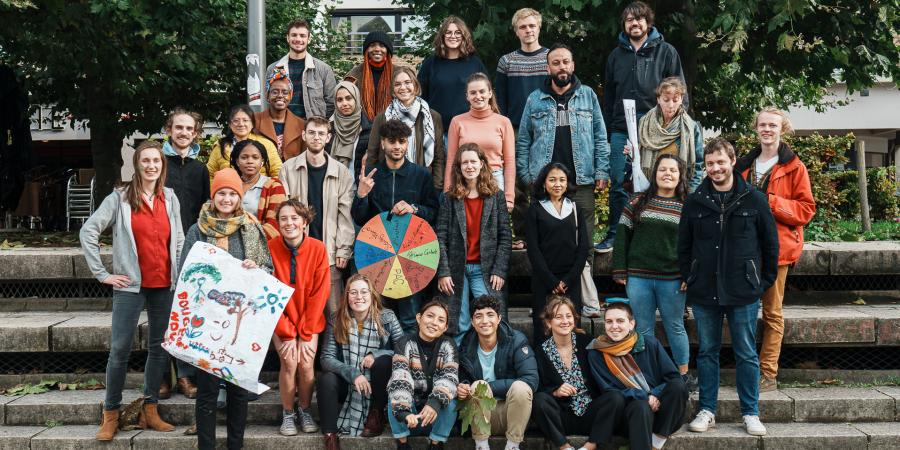
More and more UCLouvain students are choosing to commit to a more sustainable, equitable and inclusive world through Louvain Coopération's Student Solidarity programme.
Every year, more than 1,000 participants join this adventure, which allows them to support projects in the Global South, develop their skills and, for some, carry out their own solidarity initiatives.
The Solidarity Fund: bringing projects to life
The Solidarity Fund enables students to propose and develop civic actions in Belgium or in the Global South.
They receive personalised support from the Louvain Coopération team, practical training (project management, communication, interculturality, etc.), as well as funding of up to €3,000 for selected projects
“This experience transformed me. It allowed me to step outside the academic world and put my knowledge to practical use. I learned to listen, adapt, plan in a hurry, and deal with unexpected situations in the field.” Esthere, Solidarity Fund winner.
Interactive training courses to strengthen skills
Throughout the year, Student Solidarity members can take part in interactive training courses focusing on topics such as decolonisation, ecological transition, gender inequality and political advocacy.
Designed around the questions and concerns of young people, these sessions take the form of participatory spaces where everyone can exchange ideas, reflect and co-construct concrete courses of action.
These training sessions are not limited to theoretical learning: they aim to provide keys to understanding while strengthening students' ability to take action on their campuses and in society.
A virtual library
To further their knowledge, Étudiant·e·s Solidaires members have access to a virtual library containing a wide selection of articles, books, podcasts and films.
Researchers, activists, artists: the diversity of voices represented encourages critical thinking and allows students to broaden their understanding of major global issues and the just transition.
How to participate?
The programme is open to all UCLouvain students for an annual fee of €12.
Registration can be done:
- when registering at the university, by ticking the ‘Étudiant Solidaire’ box (the amount is added to the tuition fees),
- or via an online form and bank transfer.
A meaningful commitment
Through their membership, each Student Solidarity member contributes to the funding of projects carried out by Louvain Coopération in the Global South and initiatives led by other committed students via the Solidarity Fund.
They develop skills that will be useful for their future, meet other inspiring young people, and above all, help build a more sustainable, equitable and inclusive society.
More news