Evaluate to better build the agroecological transition
Evaluate to better build the agroecological transition


As the academic year draws to a close, we share with you some of the results and successes achieved on the ground by our teams and partners in 2022. During this period, the successful launch of our new 2022-2026 development programme has been at the centre of our concerns, in our desire to relentlessly pursue the construction of a sustainable, equitable and united world.
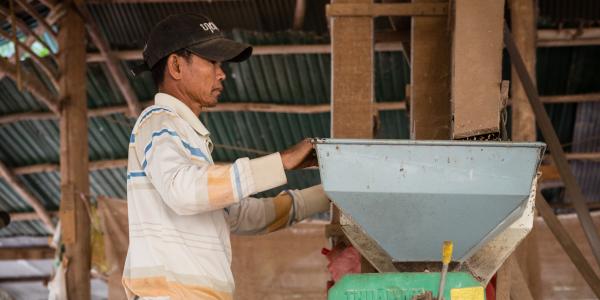
Measuring the degree of agro-ecological transition of the farms monitored is an integral part of Louvain Coopération's intervention in Cambodia. In 2022, we collaborated with the Ecosystem Services and Land Use Research Centre (EcoLand) of the Royal University of Agriculture of Cambodia to carry out 5 assessments on this subject, before starting field interventions with our partner farmers' organisations. Veata Mey, head of our agroecology projects in Cambodia, tells us more.
.
These evaluations carried out in the field included a preliminary part to identify the levers and obstacles to the agroecological transition of the project's farmers and a practical application of the agroecological assessment and performance tool (TAPE), developed by the FAO (Food and Agriculture Organization of the United Nations) to quantify farmers' current performance in terms of agroecological transition. Finally, a measurement of important indicators not included in the two previous assessments was carried out.
 714 people took part in these studies, representing different sectors and activities: farmers, representatives of farmers' organisations, government officials, end consumers, the private sector...
The evaluations provided a learning opportunity, but also a state of play of the farms for all stakeholders. Academic knowledge and field experience were exchanged during the process. Data processing and analysis is underway and the results of these studies will be used to design effective intervention strategies for the benefit of all project partners. The results will be widely disseminated to all relevant audiences to support advocacy efforts for agroecological transition in Cambodia.
More news