Peru: research on local biofertilizers

Peru: research on local biofertilizers


It's been more than a month since Jean and Igor began their volunteer work in Peru. Here is some news.
Jean and Igor are two Bioengineers who have recently graduated from UCLouvain and KULeuven. They lead a two-month voluntary internship with El Taller, Louvain Coopération’s Peruvian partner. Well occupied with their research, they give us some news: "Overall, even if communication is sometimes complicated (not in terms of language but in terms of planning and schedules), the internship is going really well There is a great understanding with the members of the team: they listen to our research and knowledge and we fit in well with their operating habits. The exchanges with the farmers in the field are enriching and ours. Spanish is improving at high speed Our daily life fluctuates between! : the El Taller office in Arequipa for team meetings, our home to telework on our research writings, and the producers' fields to work on or help our experimental plots, unrelated to our experiment. "
Tests on biofertilizers
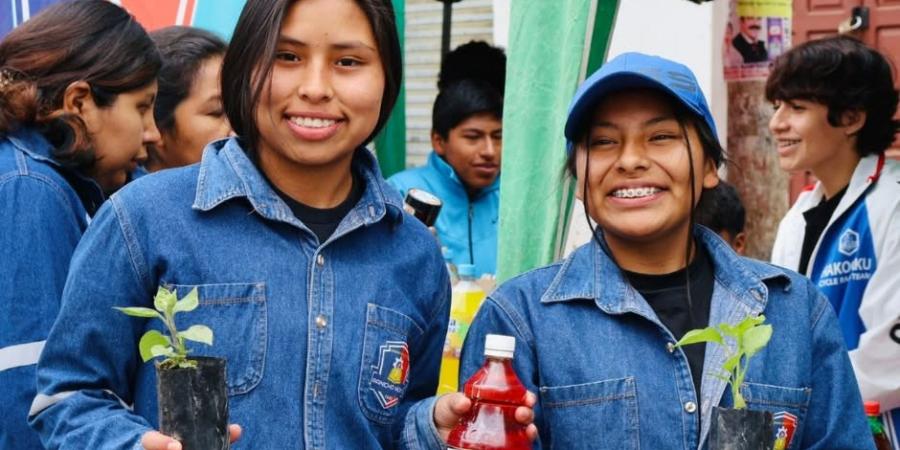
The objective of this volunteering and research is to test microbial biofertilizers on garlic, lettuce and marigold crops. They compare a production from El Taller, already used by local farmers, but without experience or statistical results, and a second microbial product, resulting from the research of the two bioengineers. The latter contains strains of Trichoderma fungus, which can help the plant in the rhizosphere. "Many related benefits are already amply described in the scientific literature: solubilization of phosphorus, absorption of nutrients, plant growth, diversification of soil microflora and fight against pathogenic fungi", they comment. /p> At the end of this volunteering, Jean and Igor have already planned to produce a manual for the use of Trichoderma on crops, intended for farmers, but also a blank experimental protocol for El Taller intended for subsequent experimental trials in the field. Finally, they will write a final report of experience and activities for Louvain Cooperation and El taller. "The idea is to already organize our succession! We are preparing documents so that they can finish the experiment without us and send us the results."
More news