
Partnership for Agroecology Transition, Networking and Efficient Resilience
Partnership for Agroecology Transition, Networking and Efficient Resilience (PArTNER)
Our objective
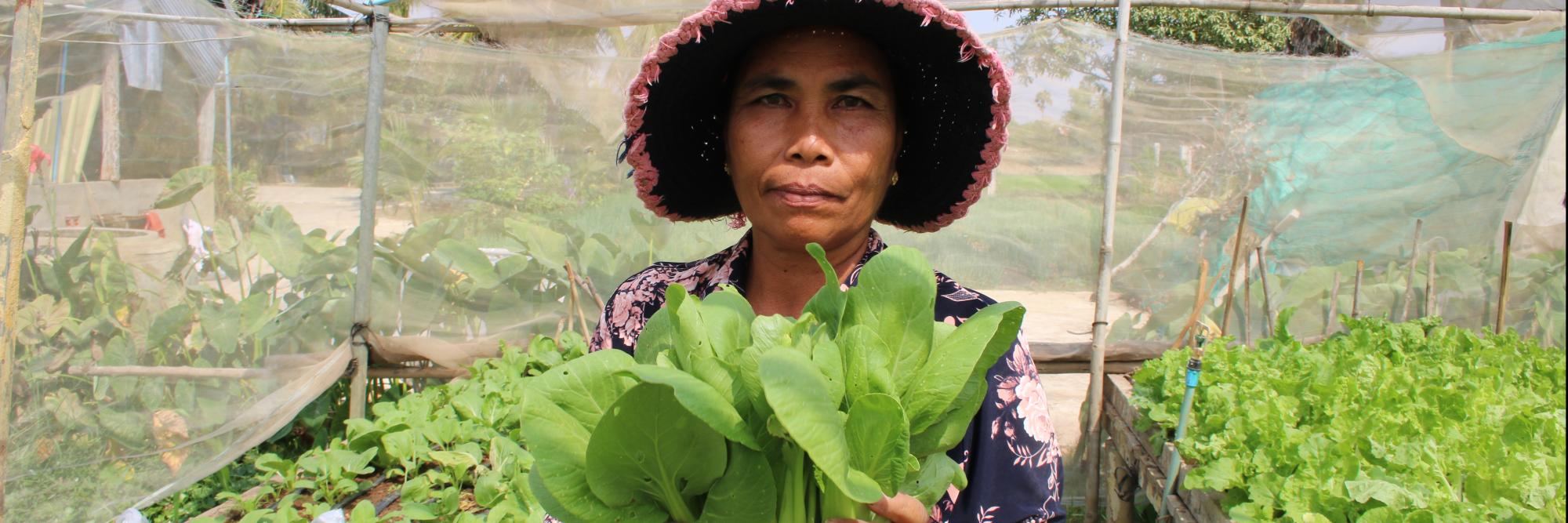
The PArTNER project aims to strengthen the economic and social resilience of rural Cambodian families by accelerating the agroecological transition, structuring sustainable value chains and promoting inclusive governance in which women play a central role. The objective is to enable small-scale producers to access decent incomes, lucrative markets and greater participation in decision-making.
Our actions
- Development of sustainable agricultural systems through a farmer-to-farmer extension system led by farmers specialising in training, agroecological experimentation and practices related to SRP rice, seeds, bokashi, vegetables and livestock farming.
- Strengthening agricultural cooperatives and their unions through support in administration, finance, governance and planning to improve their autonomy and efficiency.
- Supporting agroecological value chains in management, marketing, business development and standards improvement.
- Supporting farmers' organisations to represent producers in dialogues with the private sector and authorities, and promoting policies that favour smallholder farmers.
- Promoting female leadership and supporting women's entrepreneurship through training in decision-making, advocacy and the development of income-generating activities.
- Raising awareness among urban consumers about healthy eating, producing videos and educational content, and creating commercial links between agroecological producers and markets.
- Networking agroecology stakeholders: training, exchange visits, workshops, dissemination of good practices and small grants programme for local initiatives.
Our impact
The project strengthens the economic resilience of rural families, accelerates the agroecological transition, increases the incomes of small-scale producers, and promotes the empowerment of women within agricultural organisations. It contributes to reducing chemical inputs, providing healthier food for consumers, and establishing sustainable and equitable value chains. Finally, it energises networks of actors committed to agroecological transition and influences public policy in favour of sustainable food systems in Cambodia.