Numbers that make your head spin
Numbers that make your head spin


According to the International Diabetes Federation, one in two people in the world lives with diabetes without knowing it, but it is in low-income countries that this number is highest, reaching 66% of the population.
For patients who are unaware of their condition, this situation can lead to complications that are all the more serious because they have no access to healthcare systems capable of properly managing these pathologies.

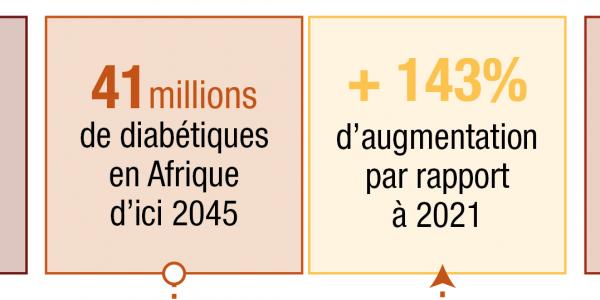
For its part, the World Health Organization (WHO) estimates that in Africa, 41 million people will develop diabetes by 2045, an increase of 143% compared to today.
This situation is due to a multitude of factors, including limited access to healthcare, inadequate training of healthcare professionals, and lack of awareness of potential symptoms among the general population.
Focus on complications
If left undiagnosed, type 2 diabetes* can lead to serious complications.
*The most common form of diabetes. Affected patients develop insulin resistance, which means they can no longer properly regulate blood sugar levels. In addition to hyperglycemia, this form of diabetes is asymptomatic, and more often affects overweight and elderly patients.
- The risk of cardiovascular problems is doubled or even tripled
- Neuropathy leading to limb amputation
- Retinopathy (blindness)
- Death
The majority of diabetes-related deaths occur in low- and middle-income countries, where the diagnosis rate is lowest.
Diabetes has become a major public health problem in both the North and the South. Early diagnosis is essential because it considerably reduces complications and the costs inherent in their treatment.
Want to learn more about diabetes and the issues in the South?
Discover our digital campaign: “Diabetes, a global scourge ”.
More news